
The Neo-Luddite (not really) Weekly - Issue #3

Well, that's awkward... I created the "magazine" section of the Neo-Luddite Handbook to keep you informed about important news you might have missed about our dystopian digital world. However, the major news has been all over the mainstream media these past two weeks, so... Is this it? Is this (not really) weekly's purpose over after barely starting? Is the idea of civilization ending at the hands of techno-fascists already entering the collective consciousness? I mean, the sooner the better, but...
In any case, for those of you who missed it, here is the news in question:
Jensen Huang, Nvidia's (now) former CEO was found to have had several affairs. It would be his private business if one of his mistresses wasn't more than probably a Chinese spy.
 Garrett M. Graff

He had to step down from Nvidia, and the situation is currently quite unstable. Despite reporting significant earnings, Nvidia's stock has fallen for one week straight.
If you work in any sort of office, you know that a little over a week ago, on Friday the 13th (what a date!), many Microsoft products (especially Outlook and 365) crashed and were unavailable for more than 24 hours.
It was all fun and games on Friday, with plenty of Schadenfreude: my university insisted on using Microsoft a few years ago, despite some calls for open-source solutions (I suspect money was involved in that decision), and well...
I hope it helps the university reconsider its life choices regarding its digital tools, but if so, it's not making this public. The only official communication I am aware of concerning Microsoft this week is a reminder to update the security of our accounts, especially 2FA. Although no security breach has been reported, reminding everyone about internet security is not a bad idea, and having more secure accounts is always good practice. I'm often baffled by how so many people on campus – teachers and students alike – are totally inept and ignorant about computer-related things. I hope the administrative staff is a little better. I know the ones I work with are. I can't vouch for other offices.
This Mashable article explains the causes of the outage. However, since the sources of the explanation are Microsoft employees, I'm not totally sure how reliable this is.
 Matt Binder
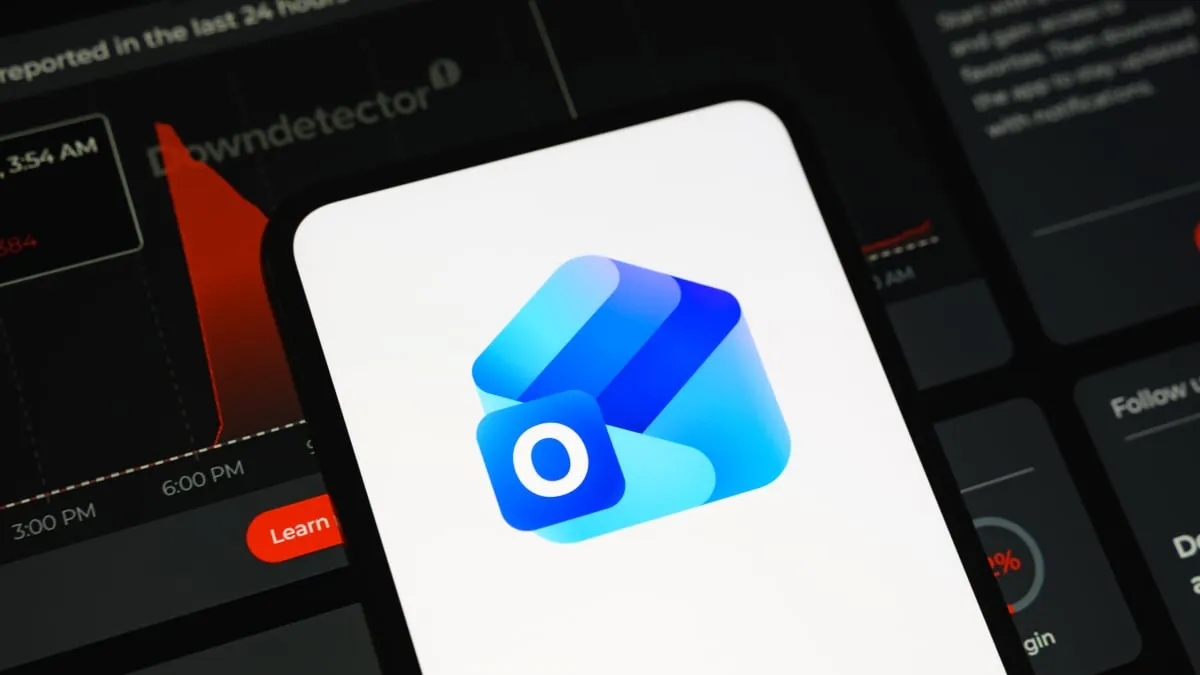
Friday was quite relaxing, but Monday and the rest of the week were not. That's partly why I was so busy last week. In normal times, the outage wouldn't have affected me much. One day without work email is no big deal, and I don't use the other Microsoft services that were affected except for Teams when the university forces me to use it. However, we were two weeks before the midterm presentations for my second-year students, and it means a lot of back-and-forth with email. It's the time when I check scripts, answer my students' questions, and threaten the students who haven't started doing anything yet.
Americans who wanted to travel on that day were also in for an unexpected surprise when they found that all planes were grounded. Americans fly too much anyway, so a bit less CO2 in the atmosphere can't be a bad thing.
That's not all. During that weekend and the following days,
- Workday, a system designed to help businesses recover from outages, experienced an outage itself!
- Claude had trouble functioning, too. That's probably one of the best pieces of news on the list.
- On Monday, it was AWS's turn.
- JPMorgan Chase experienced major issues affecting many banks.
- United Airlines lost important flight data.
- And then, the NSA and Apple suffered major technical issues as well.
Did I forget anything?
All in all, it was an interesting week.
The timing was partly coincidental, but it was eerie enough that some people — and not just those with tinfoil hats — started to wonder if the U.S. was under attack, given that almost all of the issues occurred in the U.S., even those that affected the rest of the world.
While it wasn't a concerted cyber-attack, it's fair to say that an attack on the U.S. by another major power could start this way, albeit on a larger scale.
I just said that the timing was mostly a coincidence, but only "mostly." According to almost all the professionals who have spoken on the topic, what happened is not surprising. It is in large parts related to the fact that more and more companies have been foolishly firing their technical staff, thinking they could be replaced by so-called AI.
Many people don't seem to understand, and it's a big problem when they're in charge of important parts of the economy, that IT people do more than write programs for their company. An even more important part of their jobs is maintenance. Bugs happen all the time. Most cause minor problems, but if you don't fix them as soon as you find them, they accumulate until they reach critical mass and cause major problems in your system.
So many companies fired their IT teams, had LLMs write the software for the company, and... what is written is usually a huge mess as far as code is concerned, not very legible or easily understandable. Sure, it works... Until it doesn't. And then, there's no one to fix it.
This is what has been happening, and what will be happening more and more in the future if people don't wise up. We can expect other weeks like this one (or worse) sooner than later.
The following article doesn't exactly cover what I just explained, but it gives you another issue with AI being put everywhere.
 Victor Tangermann
I have many more things to talk about (including Google finally realizing that diverting its users away from going to the Web is bad for business, especially when your entire business model relies on people doing just that), but the big news of the week is Anthropic's IPO.
You may have read that it's the biggest IPO ever. It's true.
However, keep in mind that Anthropic (and OpenAI, for that matter) has yet to turn a single cent of profit, and the IPO is mostly a way to raise more money (perhaps because investors are becoming less willing to invest in Anthropic).
In any case, the bubble is growing and becoming thinner by the day. More and more observers and analysts are saying that the bubble will burst soon.
Here is a screenshot of yesterday's Nasdaq:
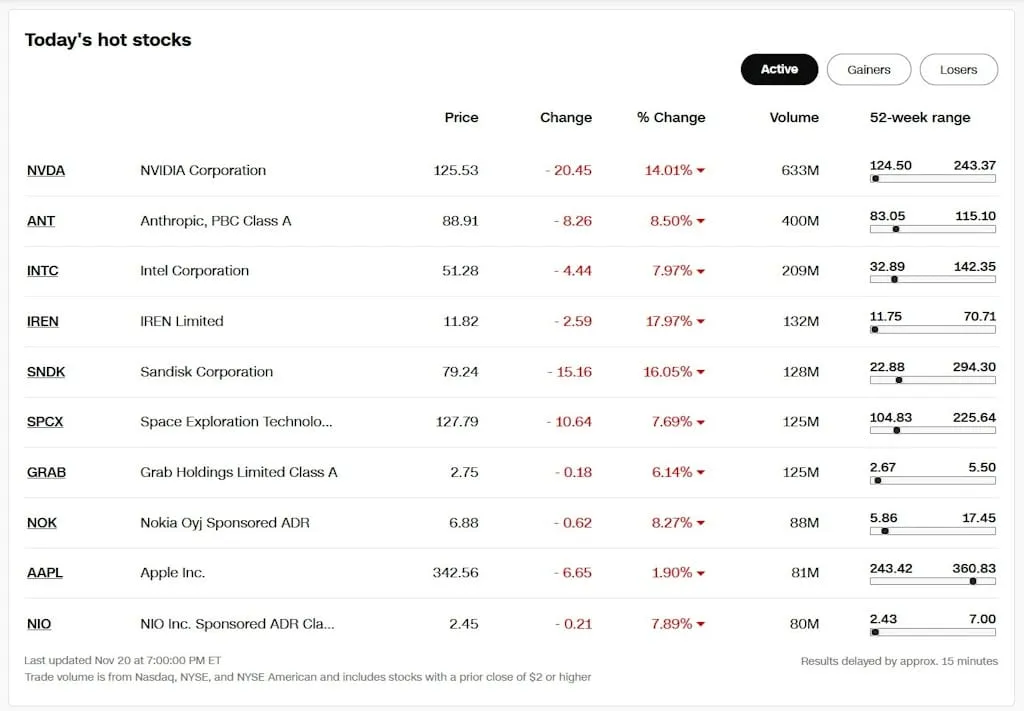
Apparently, it's been like this all week. I didn't pay close attention because I was busy catching up on emails from my students, but the chatter online is getting weird. It's a mix of terrified predictions about what's to come and some weird excitement, too. I mean, who wouldn't want an end to Anthropic and OpenAI? Who doesn't want to be able to afford a computer again?
On the other hand, though, so much money has been poured into that grift that the most pessimistic analysts think it will destroy not just the tech industry but the whole economy.
It's good news for the climate but bad news for people who don't want to starve.
We'll see.
A couple more things:
In the last issue, I posted a link to Ed Zitron's blog. In these uncertain times, I highly recommend following him to gain a clearer understanding of the situation.
And this interview from yesterday is what you should watch right now:
Here’s my full CNBC interview covering Anthropic, NVIDIA, Oracle, circular financing, and how the worst is yet to come for AI.
— Ed Zitron (@edzitron.com) 2026-11-20T23:25:28.274Z
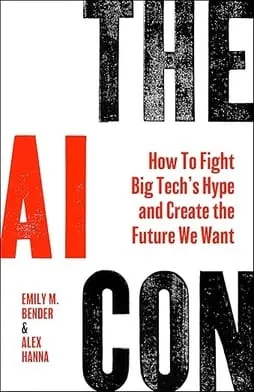
I meant to write a review of The AI Con, but I doubt I'll have the time, so in short:
If you're not too sure what so-called "AI" is, or if you think you know what it is, or if you're simply a living and breathing person, just read this book. Whoever you are, read it:
Also, follow its authors online:
Emily M. Bender:
Alex Hanna:
Finally, sometimes I like to do silly cartoons with Lego. Here is my latest, totally related to today's topic (it's a small present if you're still here reading):
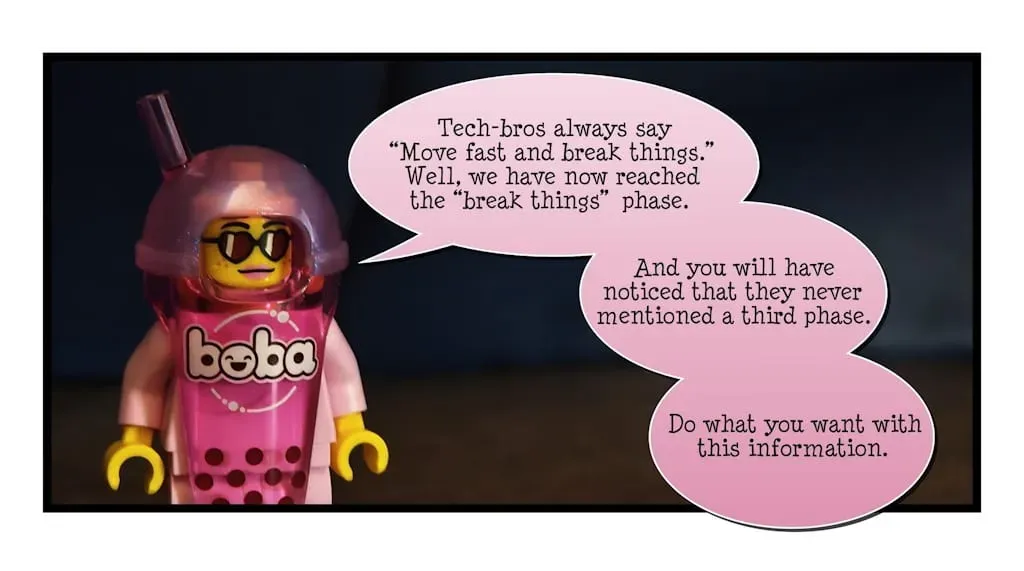
Alright, that's all for today.
I'll try to have the next issue to be shorter and more focused... Next week... or the one after.

As always, if you enjoyed this post, please share it with your friends and contacts on your preferred platforms. It would mean the world to me, as would your subscription to the newsletter (it's free, although you can also help me pay the bills if you can afford it).
In this day and age, when you can no longer rely on search engines to be discovered, and when the web is becoming increasingly full of AI slop, it's more important than ever to know that you are read and followed by real humans. This is what still motivates me to write online.
Thanks for reading.
Best,
David



Comments ()