
"Reverberations~Okahachi Water Wheel" by Makoto Oka+The Music Mill Project
Today, we're discovering and listening to improbable music in the middle of a forest on Shodoshima.
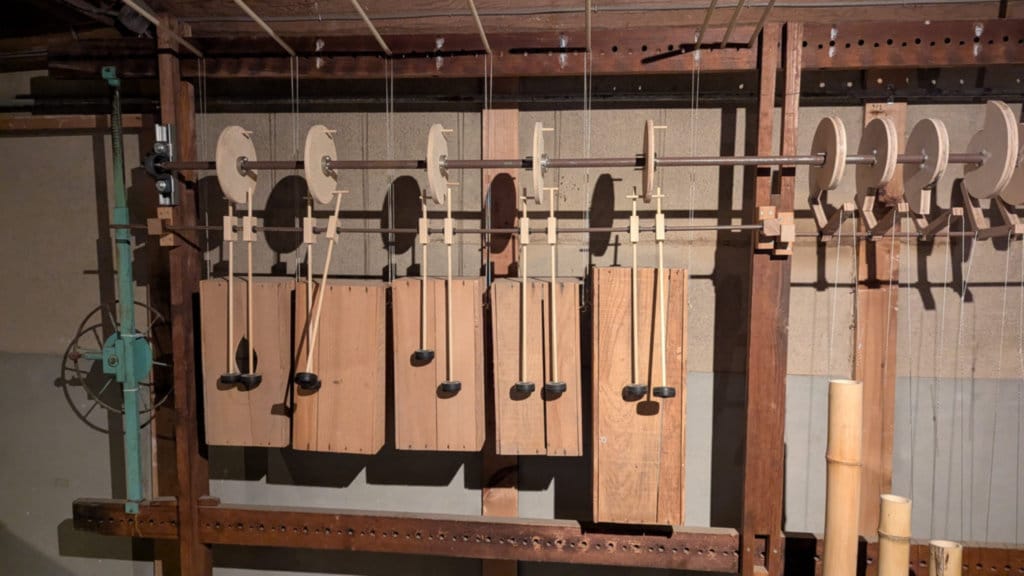
When people, blogs, and journalists talk about the Setouchi Triennale, it's often the most famous or the most impressive artworks that get highlighted (I'm guilty of it too, at times). However, the smaller artworks, the ones that are out of the way, the ones that are not so spectacular or social-media-friendly, are often just as interesting, if not more so.
Today, let's talk about one of those artworks.
It's called Reverberations~Okahachi Water Wheel, and it's by Makoto Oka and The Music Mill Project.
In short, Makoto Oka is a musician and the director of the Music Mill Project, in which he transforms various rural and discarded objects into musical instruments (including a watermill somewhere in Japan, hence the name).
In 2025, he created Reverberations on Shodoshima, an artwork that required time and effort to reach and experience. Those who visited too quickly missed it. Too bad. That's why I always advise people to slow down and actually experience and enjoy the island they're visiting, rather than just checking things off a list as quickly as possible.
It was located between the villages of Nakayama and Hitoyama, in the middle of nowhere. Although it was accessible by a small road, there was no parking for visitors. The only way to reach it was to walk about 700 meters downhill from Nakayama. You could walk down the road from the Kabuki theater, but a much more interesting way was to walk down the path from Embrace, Wang Wen-Chich's bamboo house, through the forest.
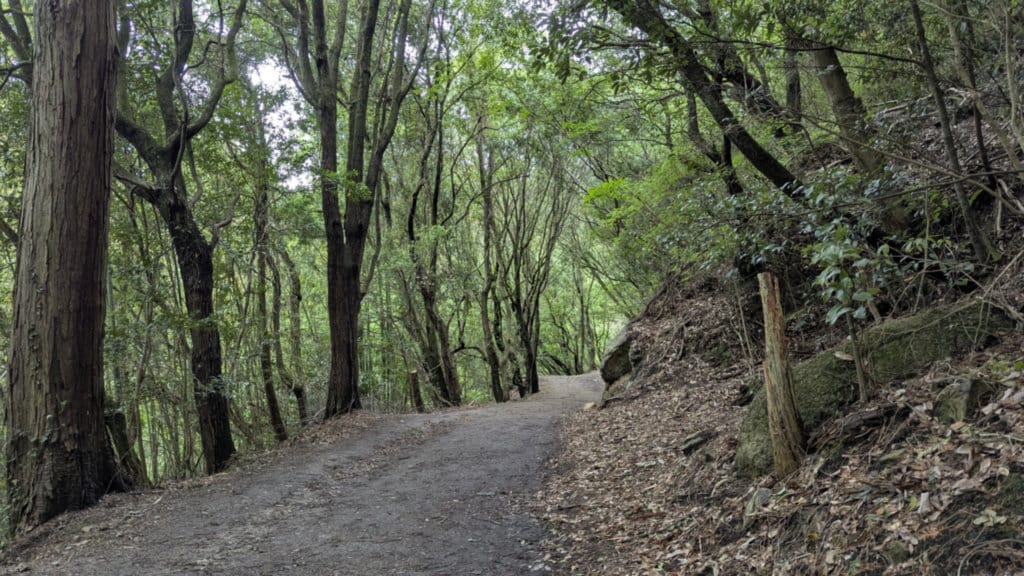
During the early editions of the Setouchi Triennale, when there were more artworks in Hitoyama and Nakayama, walking up or down this path was one of my favorite experiences. I'm sure it was also a very interesting moment for very urban people, such as some Tokyoites, who ended up there. Nowadays, there are fewer reasons to walk it, so I was happy to visit again, even if it was only a short section of the path.
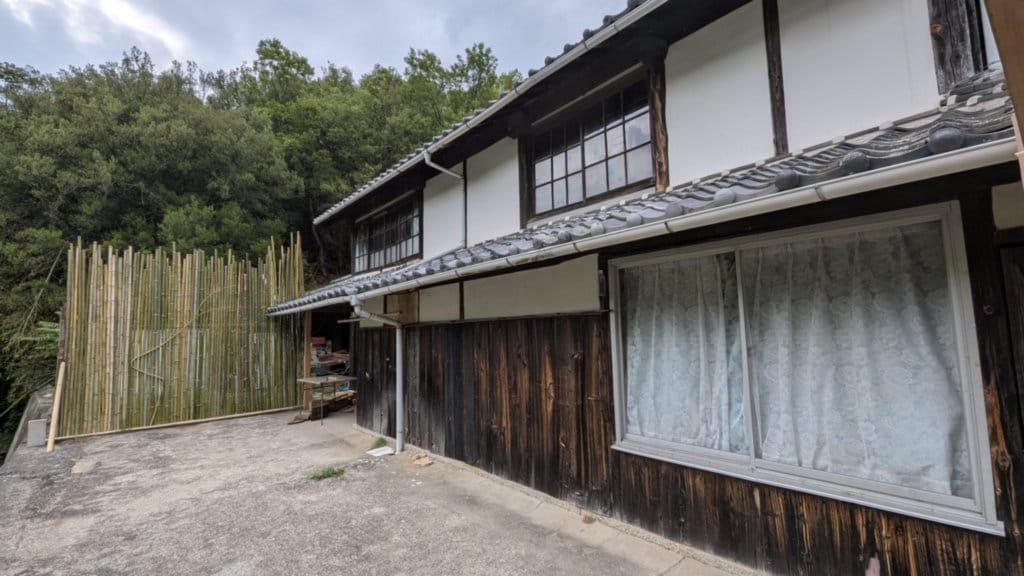
After about 700 meters, you will arrive at a small, abandoned farm by the river, far from everything. It used to be a somen factory, and last year it housed one of the festival's most fun works of art.
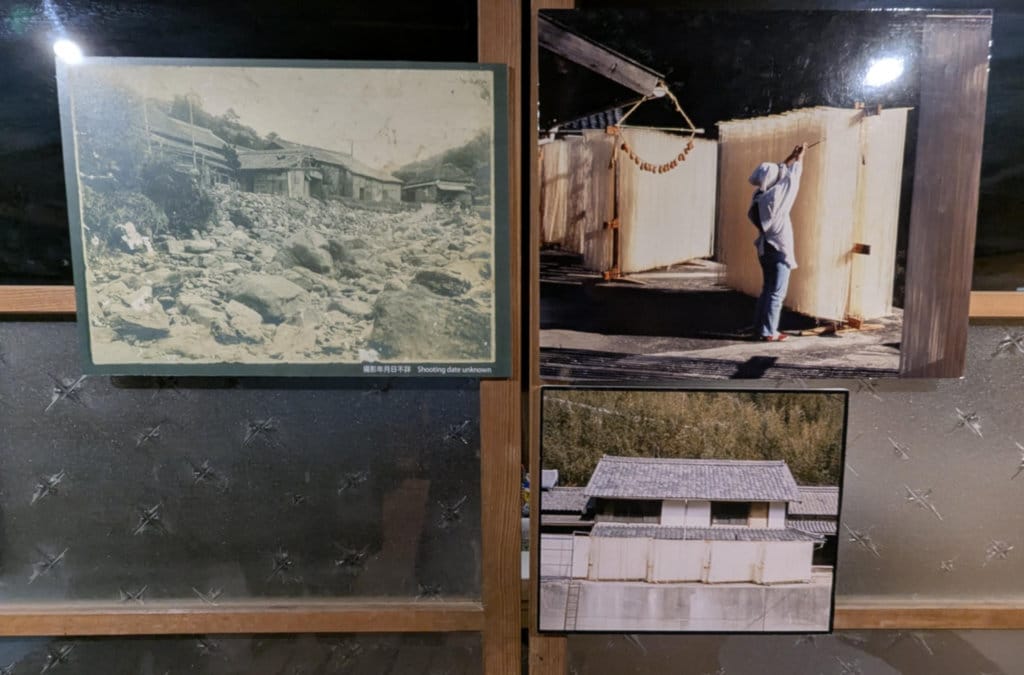
Upon arrival, the first thing you see in the inner courtyard is this old wooden machine.
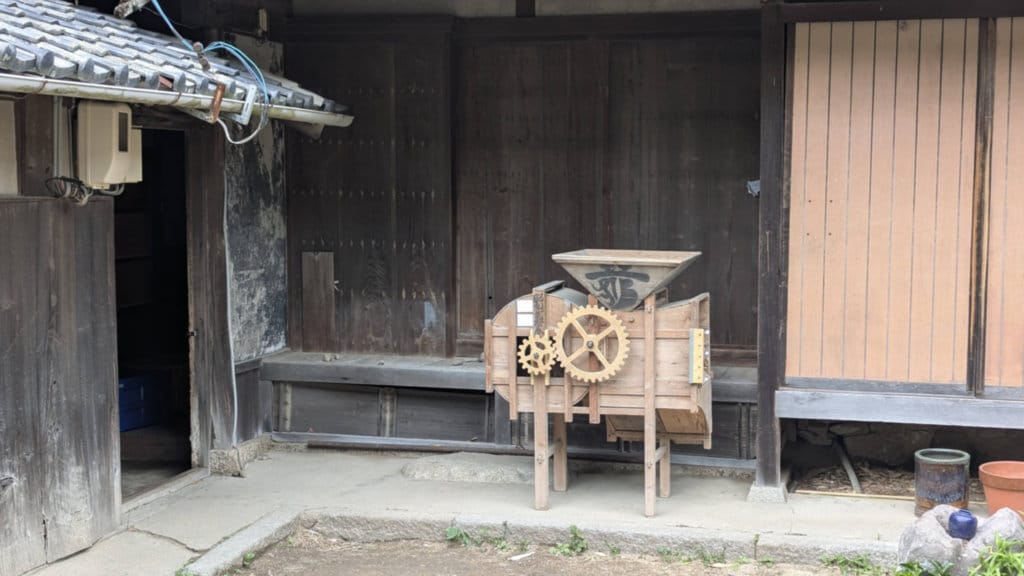
It was a very normal, traditional milling machine, which already looks strange to people who aren't familiar with them. But was it really nothing special? Well, these gears were new and out of place. When you turned them, music happened!
The interior of the building was full of improbable musical instruments made from all sorts of rural tools, some very old and some not that old (for example the somen-making machines).
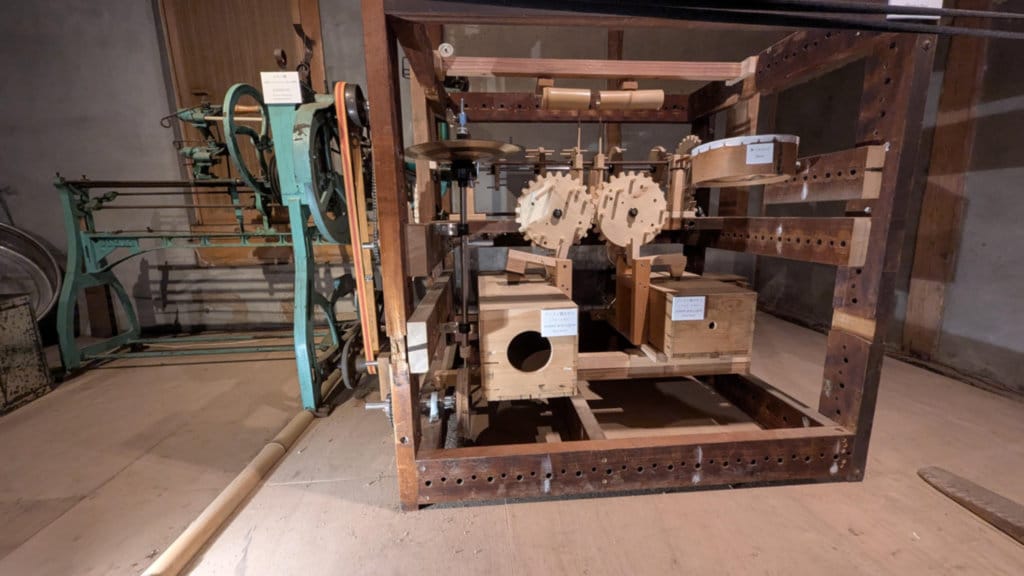
Some were automated and produced a very engaging cacophony throughout the house. Others you could play if you knew how, or you could make random sounds if, like me, you can't play music to save your life.
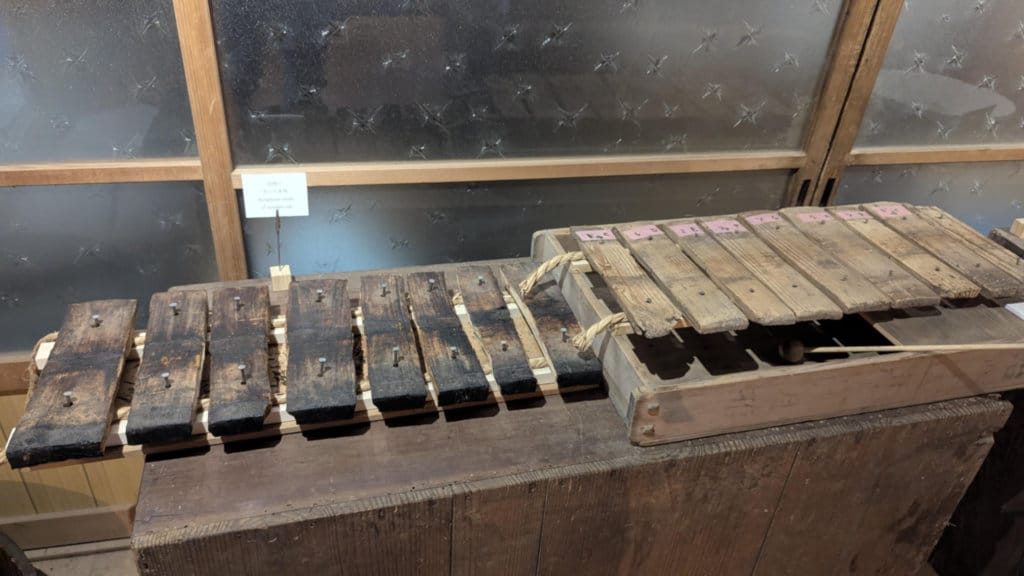
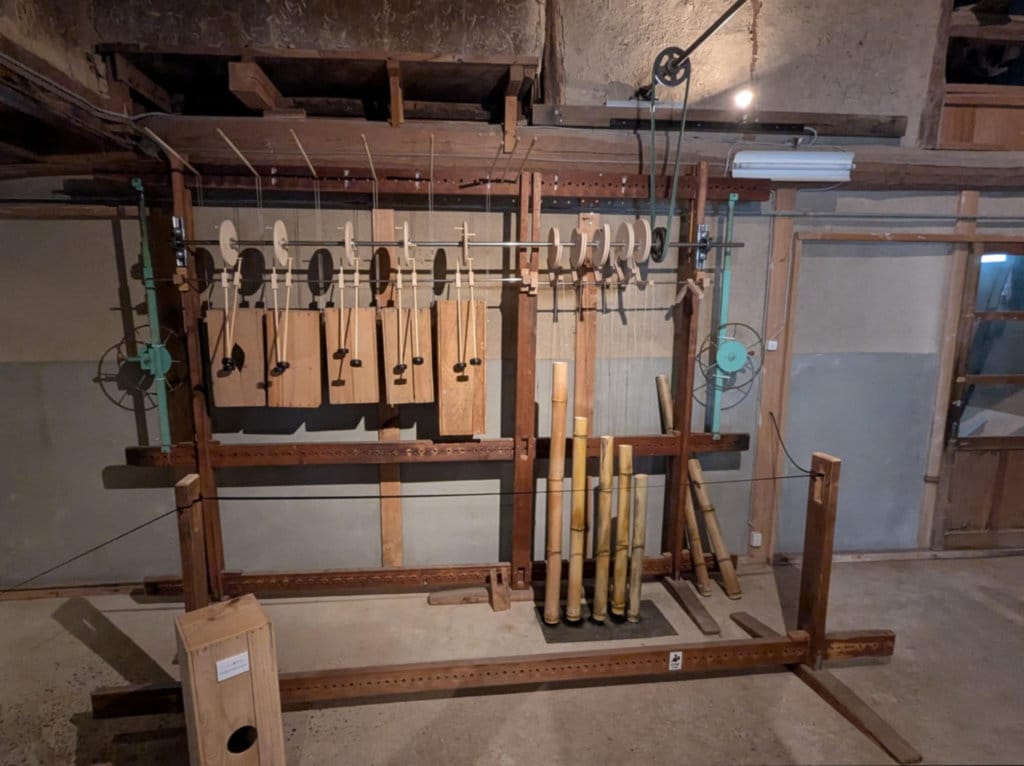
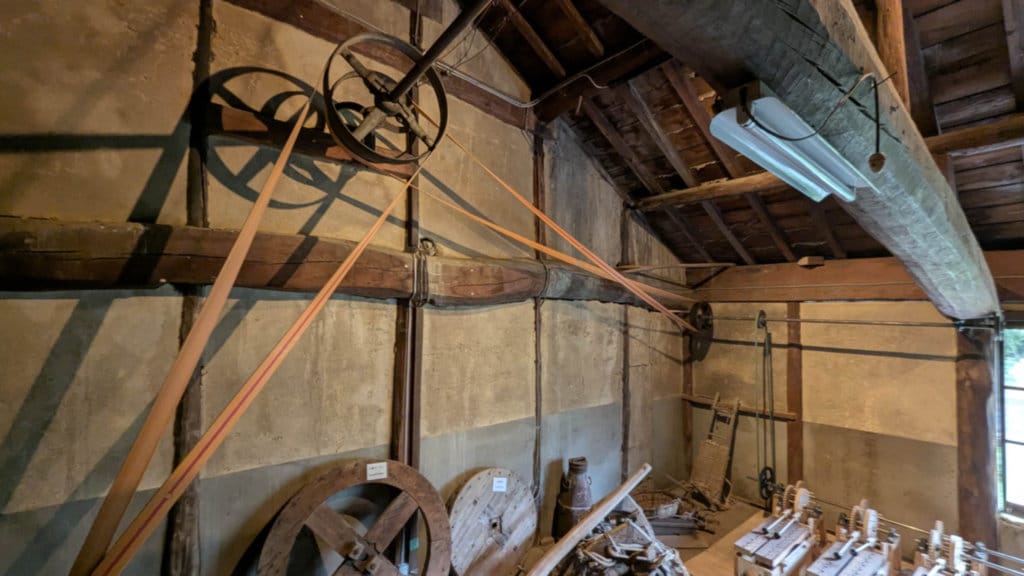
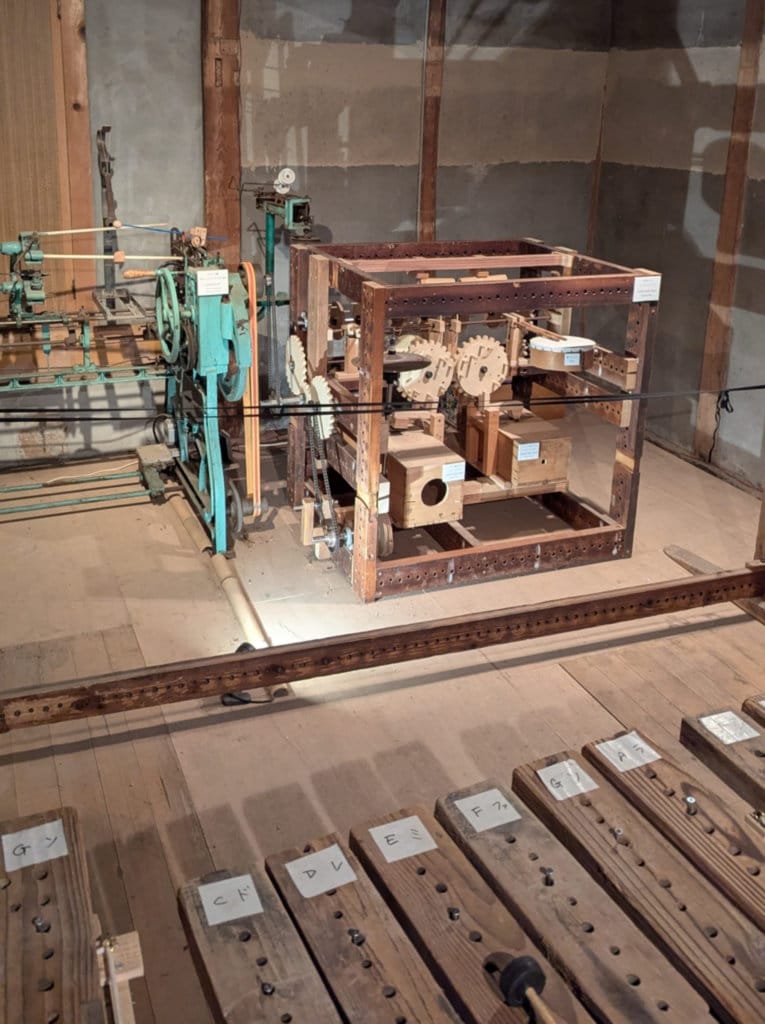
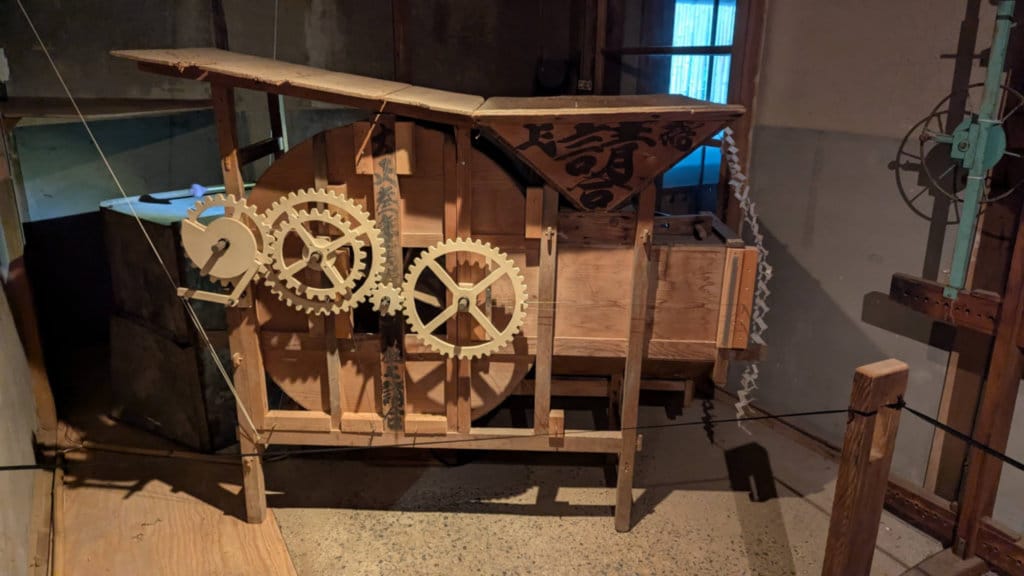
In any case, interactive art is always the most entertaining, and all the visitors were having a good time. Some played music with those strange instruments, or even dancing a little for the least shy among them. In any case, everyone had a big smile on their face.
Now, I'll admit that only showing you pictures of these improbable musical instruments is a bit underwhelming.
How about seeing and hearing them in action instead?
And a little more:
 David (DavidB)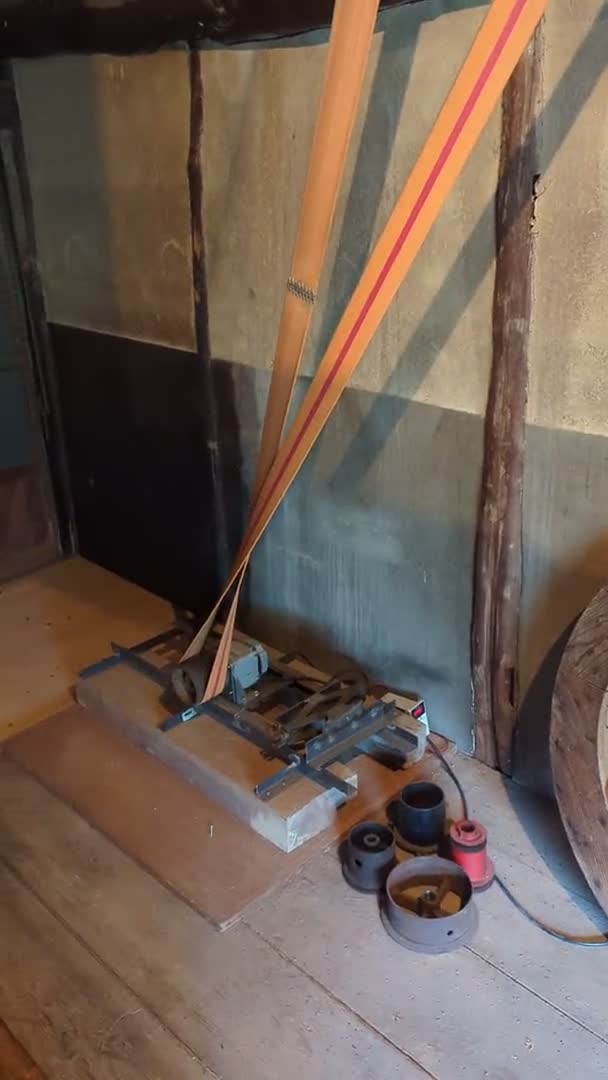
(By the way, the link above is to a new platform called Loops. I highly recommend it if you like short, vertical videos but want to avoid the most popular platform that shall not be named. Loops is Canadian, open-source, and decentralized — meaning it doesn't belong to anyone in particular — and is part of the Fediverse.)
I'm not sure if Reverberations will stay there or be open during future Triennale sessions. I think it's unlikely. This post is here to show you what you may have missed and to bring back nice memories if you experienced it. It also serves as a reminder not to overlook small, remote places during the festival.
Links
In my last Japan Art Islands post, I wrote about appreciating and experiencing contemporary art. A couple of days later, Art Walkway published an article that, although discussing a slightly different topic, complements my post.
 Editorial
I sometimes talk about (see a few paragraphs above) whether old artworks reappear or not during future sessions of the Triennale. I usually know what happens to some of the temporary art, but I have no idea what happens to most. And sometimes there are some surprises. For example, I learned today, through the link below, that one of the artworks on Ogijima, which closed in 2019, is still there and may reopen one day. It's true that the house hasn't been reused since then, but I assumed it was because it had been damaged by a typhoon and was unsafe for visitors (well, maybe that's the reason why it's closed).
https://www.koebi.jp/news/report/entry-4347.html
As always, thanks for reading.
Best,
David
Comments ()