
How to Appreciate Contemporary Art?
What? You say you don't appreciate contemporary art because you don't understand it? I'm afraid you're missing the point and this article is here to help:
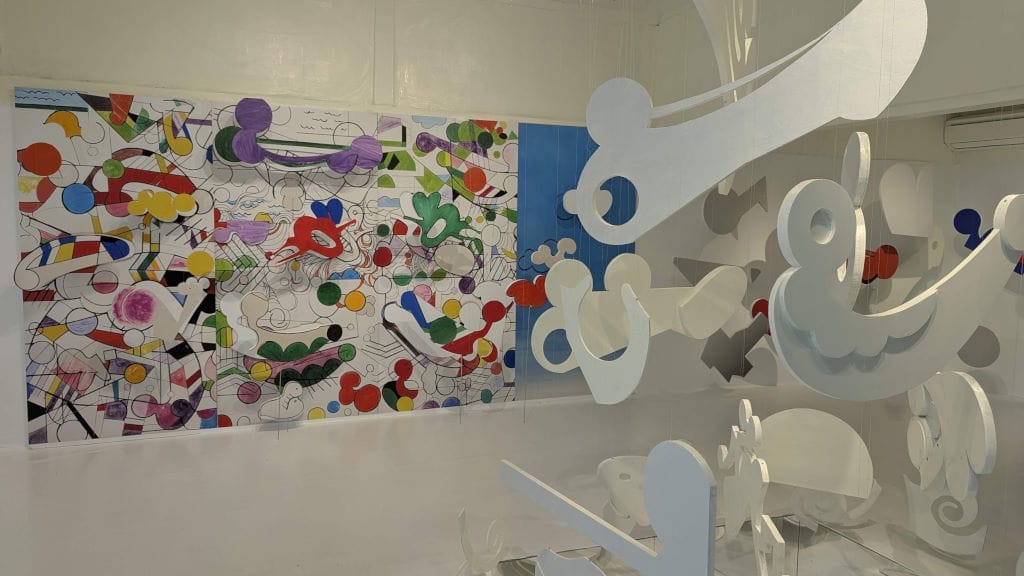
I often hear people say,
"I don't like contemporary art. I can't understand it."
Well, say no more! I'm here to help.
Disclaimer: I'm not a specialist in contemporary art, but my education in literary theory (which is not so different from fine arts theory) and my work experience in Paris assisting with an art history program, and my close following of the Setouchi Triennale since its inception, give me some credentials on the issue, even if my sources can sometimes be: "Trust me, bro."
Note that this is not an academic article. I wrote it as it came to me, so there may be a few mistakes and approximations. However, the gist is correct, so you'll have to trust me despite the lack of sources.
Before we begin, here is some terminology to keep in mind: modern art and contemporary art are not interchangeable terms.
Modern Art roughly began in the 1860s with the Realist and Impressionist movements, and especially the transition from one to the other. The advent of photography also played a significant role in the emergence of modern art.
There is disagreement about when modern art ended, but it occurred sometime between 1945 and the 1970s. Regardless of its end date, modern art has ended.
Contemporary Art began... well, sometime between 1945 and the 1970s. Many factors gave birth to it. In no particular order, these factors include the democratization of mass media, globalization, the emergence of computers, and postmodernist theory. However, its earliest iterations date back much further. One could consider Duchamp's art and the Dada movement the "prehistory" of contemporary art.
In any case, it's complicated. We don't have time for a full lesson on the topic. Just know that today's art is "contemporary," not "modern."
Now that we've cleared that up, let's discuss and answer the question:
"Do we need to understand contemporary art in order to appreciate and enjoy it?"
The short answer is no.
The long answer begins with another question: "What does it mean to understand contemporary art?"
Does it mean knowing its history? Its main artists? Its main theories? Its main techniques? Something else?
Maybe.
Do you need to know these things to understand contemporary art?
Probably. Kind of.
Do you need to know these things to appreciate contemporary art?
Definitely not!
Those who disagree with me usually do so because they want – consciously or not – for contemporary art to remain elitist, for an elite that they're a part of, obviously.
If they want you to believe that you need to know all of these things, it's because they know you don't, and they want to keep contemporary art inaccessible to you and the masses.
Typical bourgeoisie.
This is also typical of the impostors who gravitate toward contemporary art circles. Unfortunately, there are many, and some have become world-famous (hi, Jeff).
Sadly, the opposite is also sometimes true. Some people don't want to try to understand contemporary art because they think it's elitist and bourgeois, and they don't want anything to do with it.
However, this is beside the point because, as I mentioned before, you don't need to understand contemporary art to appreciate it.
I feel that the main thing people mean when they talk about understanding contemporary art – or any other kind of art, for that matter – is that they feel they need to understand the artist's intent and the message behind their work.
Most of the time, when people say they don't understand art, they aren't considering the "class warfare" aspect of the dominant group weaponizing contemporary art to control the cultural canon. They mean that they don't understand the artist's message.
However, they also rarely understand the intent of artists from older eras. They just think they do, probably because classical art is more figurative and easier to understand, in their opinion.
If only they knew...
Spoiler alert: In my opinion, classical art is more difficult to understand than contemporary art. Beyond artistic factors, we need to consider historical, social, and religious contexts too. Most people have at best a high school level of knowledge about these topics. Let's not even get into older art.
Most people don't understand art in general. They don't know the intentions of today's artists, and they know even less about the intentions of classical artists. Yet, they have no problem appreciating classical art.
Why is that?
One factor is education. If you're over a couple of decades old, there's a good chance that you received an education in classicism. Although it ended in the 19th century, classicism was dominant for so long that many people still see it as the "canon" of art.
Contemporary art is simply too new to be part of the mainstream of their national culture. These things take time.
I've mentioned the author's intent a few times already. There's a reason for that. Given that the population's artistic perception and education are rooted in classicism, it's only logical that their knowledge of cultural analysis is also rooted in that time.
Enters Sainte-Beuve!
Charles-Augustin Sainte-Beuve (1804–1869) was a French (failed) poet and (very successful) literary critic. He was also a senator, a historian, and a friend of Victor Hugo. He was arguably the original archetype of the failed artist turned critic. He became renowned and influential as a critic, in part because he developed a new approach to analyzing literary works. This approach remained mainstream for the next century and beyond. As I mentioned earlier, literary and fine arts analysis are similar and related fields. I learned about his approach to art studies in junior high school, over a century after his death. I don't know if this is still how things are taught, but I know it's still the dominant approach for those who haven't delved into literary and art analysis beyond high school.
What is that approach? It is trying to find the... wait for it... author's intent when analyzing a work of art! To do so, Sainte-Beuve used various methods, including using any metatext and paratext the author may have written as well as the author's biography itself.
This method had value in his time, especially with movements of his era, such as Romanticism (a movement of which he and Hugo were a part), but not so much with modern and contemporary arts. Interestingly, he died just a few years after the beginning of modern art. I'm not sure what his opinion of Le Déjeuner sur l'herbe was. If I'm correct, he had become a politician by then and I doubt he wrote a critique of the painting.
I think Sainte-Beuve's approach is the root of the current "rift of incomprehension" between contemporary art and the general public.
As contemporary art became more abstract, conceptual, and non-figurative, it became increasingly difficult to understand the artist's intent, making it harder for non-specialists to appreciate such art.
But, dear readers, do not despair, for we have a savior.
Roland Barthes for the Win!
Roland Barthes (1915-1980) was an extremely successful and renowned French literary theorist, essayist, philosopher, critic, and semiotician. His influence on contemporary thought is immeasurable, and the world is a better place because of him. I won't write his biography here; it's unnecessary to understand his importance in making contemporary art accessible to all (take that, Sainte-Beuve!)
Why am I only mentioning French thinkers? Come on! You English speakers constantly talk about French philosophers and thinkers as the epitome of intellectualism, yet you find it strange when I mention not one, but two? If I had more time, I'd give you a few more examples. Who would you like? Genette? Derrida? Lyotard maybe?
In any case, one of the many ways Roland Barthes advanced humankind was by killing the author!
In one of his most influential books, The Death of the Author, Barthes argues that to understand and appreciate art, we don't need to care about the author's biography or intent. Even with the best of intentions, we cannot know the author's intent. After all, we're not in their mind. No one knows an author's intent when they're creating a work. Of course, authors have intentions when they create art. But how can we be sure that subconscious factors weren't also at play?
Authors may write statements, give interviews, or speak about their art, but can we trust them completely? Even if they're being honest, those words were spoken or written after the work was created. They are a narration of the intent. They're not the intent itself. Self-censorship or simply an organization of thoughts that wasn't present while the work was being created could be involved in these explanations. The author's explanation is a work about the work. It is not the "essence" of the work. It's not the intent.
In other words, the author's intent is irrelevant when experiencing a work of art. We shouldn't care about it.
So, what should we care about?
Did you notice that I used the verb "experience" a few lines ago? This is the important part: It's the viewer's (reader's or listener's) experience of the work of art that matters.
What does this art tell you? How does it make you feel? Does it remind you of something from your own life? How does it speak to you?
Experiencing, understanding, and appreciating contemporary art is essentially having a dialogue with the artwork itself, not its author.
There is no right or wrong way to experience art, and there are no right or wrong answers. Contemporary art seems elitist and inaccessible only because certain social groups want you to believe that.
Contemporary art is for everyone!
Regardless of your age, social class, or level of education, you can appreciate contemporary art. All you need to do is stand in front of a piece and let it speak to you. Put your prejudices and fears aside and listen.
Don't be afraid. Step inside a museum or gallery and experience it for yourself.
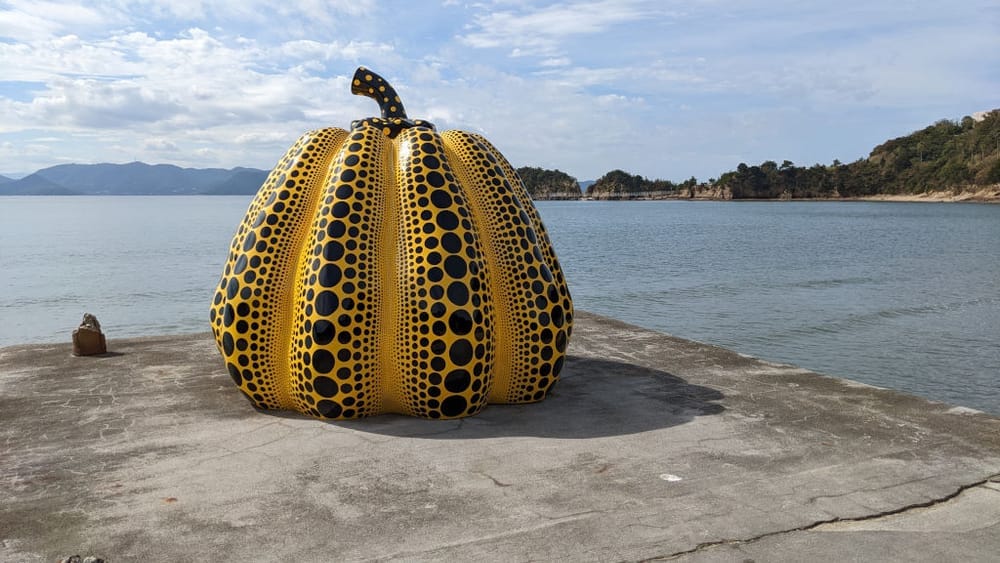
What do you think Yayoi Kusama intended when she created this giant pumpkin and placed it at the end of a pier on Naoshima? What was her intention?
Why does it matter?
What you should care about is how it makes you feel. (and to be totally honest, you need to see it in person because a picture won't suffice.)
To sum it all up in one sentence, appreciating contemporary art is not about thinking; it's about feeling.
And when it comes to thinking about contemporary art, it's about the thoughts that come to you while experiencing it, not the thoughts you were told to have.
Thank you for reading.
Best,
David


Comments ()