
Gojira & Marina Viotti - Mea Culpa (Ah! Ça ira!)
In which I talk about music, but also Paris and French history.
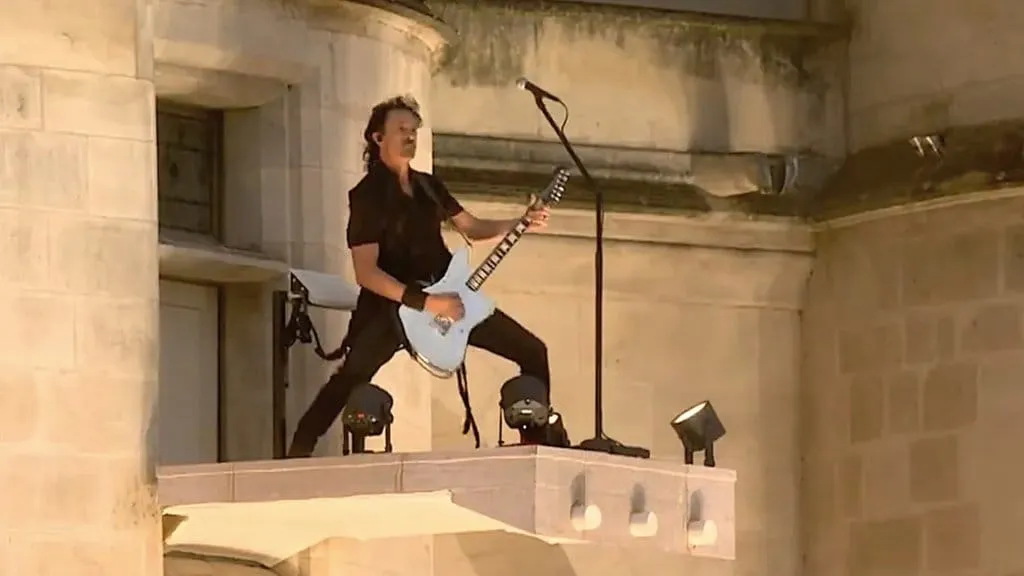
If you're old enough (and possibly not that old, either) you'll know that some musical performances are so impactful that they stay with you for the rest of your life. Although today's song is only two years old, I believe it is one of those performances. While I usually introduce music that you may not know on this blog, I assume many of you have heard this song before, as it was performed for the first time during the Paris 2024 Olympics opening ceremony. It was watched live by hundreds of millions of people around the world, you were probably one of them!
The song is "Mea Culpa (Ah! Ça Ira!)", performed by the French band Gojira and the French-Swiss opera singer Marina Viotti.
Before we go any further, let me briefly tell you about my experience that day, or rather, that night. As I live in Japan, the opening ceremony of the 2024 Summer Olympics took place for me on July 27th, from 1 or 2 a.m. (I forgot the exact time) until dawn. I went to bed early the previous evening so that I could get some sleep before waking up in the middle of the night. Surprisingly, my then 12-year-old daughter decided to watch it with me. I say "surprisingly" because I didn't expect her to be interested in such a thing, but she had fond memories of the Tokyo Olympics three years earlier, and while she denies it, deep down she wants to learn more about France and French culture. She'd also reached that age where she doesn't want to be seen doing anything with her dad (which saddens me greatly, but that's life with teenage kids). I guess she agreed because no one would see her with me as it was the middle of the night.
So, the ceremony began, combining the typical "Olympic ceremony" tropes with the usual "French ceremony" tropes. I enjoyed some of it (I was pleasantly surprised by Lady Gaga's rendition of Mon Truc en Plumes). I wasn't so crazy about others, such as some of the conceptual things that the Parisian cultural elite love, but which are pretty much clichés at this point. I wasn't sure what to think about the whole "ceremony along the Seine River" thing. It was interesting on TV (much less if you were there, I assume) and I was able to provide my daughter with some context about a few French and Parisian things. As a reminder, I am not Parisian, but I lived there in the late 2000s and that is where I met my wife, aka my daughter's mother. However, after an hour watching, it was getting late here and I was starting to feel sleepy when suddenly, this happened:
I don't know how many times I've watched it since that day, but I never not get goosebumps when I do. And although I'm not a fan of patriotism, I'll admit that I feel really proud to be French every time I hear it.
The whole time watching it for the first time live, all I could do was watch with an open mouth, repeating "Wow!" every dozen seconds or so. The adrenaline rush it gave me kept me awake for the rest of the night, but the rest of the ceremony almost went through as an after thought.
Never in my life would I have imagined that the organisers of an Olympic opening ceremony could be so daring as to create a three-minute masterpiece that will stay in the history books.
Now, while most of the French people I know had similar feelings, I suspect that not all non-French people would understand this piece completely.
So today, I'm going to do something a little different and give you a commentary of the whole thing.
Marie-Antoinette and the Conciergerie
Is that her at the beginning? I'm not sure, as there are quite a few beheaded people in the windows and on the street below, but it seems that the consensus is that the character in the opening shot is Marie-Antoinette. It makes sense, the location of the scene is extremely important. They didn't choose just any historical location, and this is definitely not any castle. This is the Conciergerie. This site has been an important political location in Paris since at least the first century, when the Gallo-Roman government built a fortress on this spot. More importantly, it was the royal palace between the 10th and 14th centuries. The turmoil of the Hundred Years' War led King Charles V to move it elsewhere. As it was right next to the Royal Courtroom, which served several functions including judicial matters, the Conciergerie also started to be used as a prison for notable prisoners as early as the 14th century (and less notable prisoners later). Note that the Paris Courthouse hasn't moved since and it is still there, right next to the Conciergerie to this day.
If you want to read more about the history of the place, please check these Wikipedia pages:
 Contributors to Wikimedia projects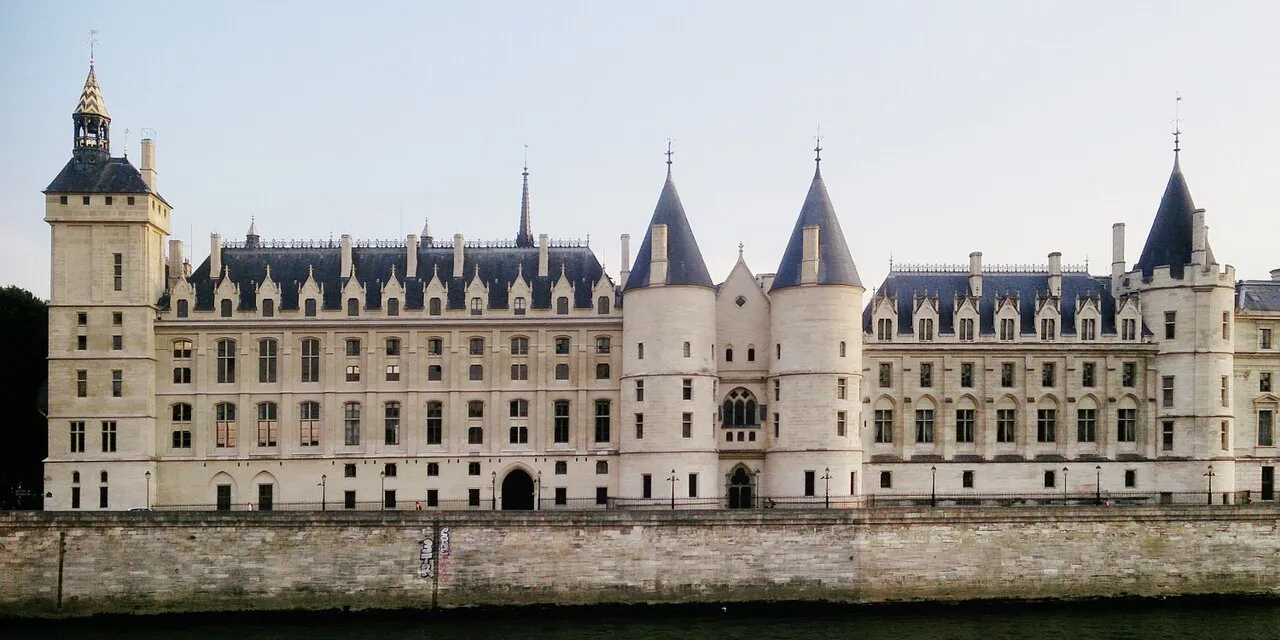
 Contributors to Wikimedia projects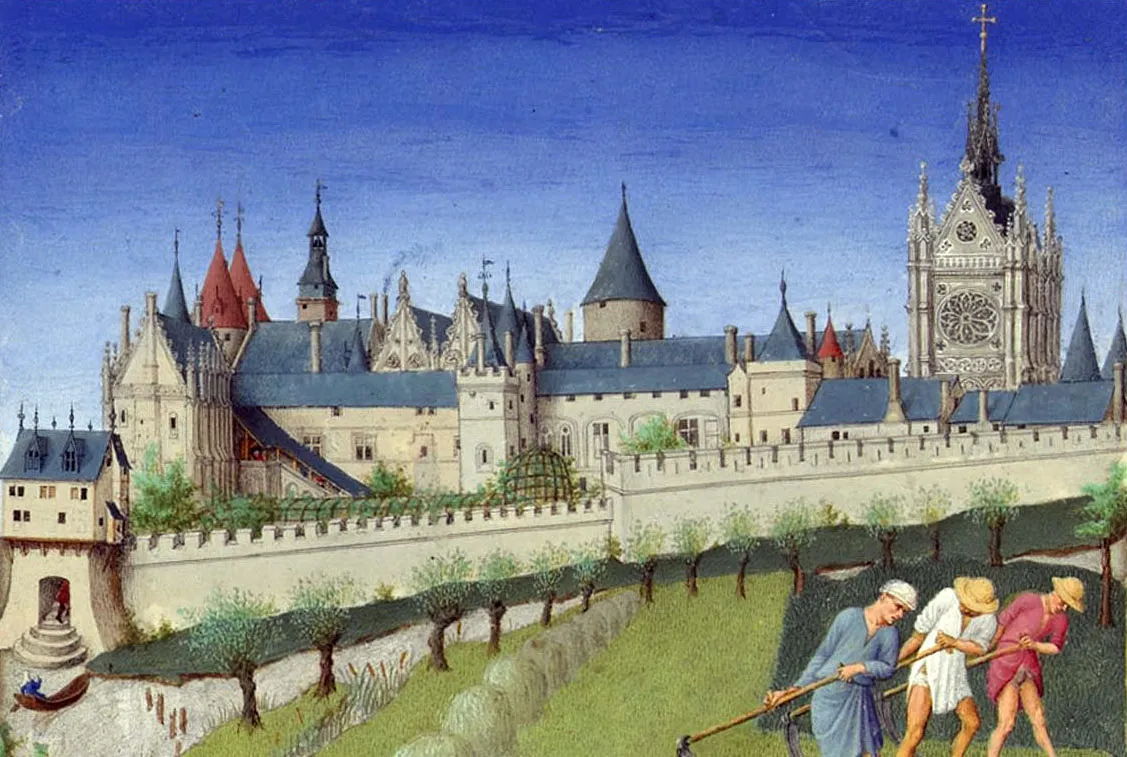
By the time of the French Revolution, the Conciergerie had become a fully-fledged prison, and it was there that Marie-Antoinette spent the last two and a half months of her life. I have read and heard here and there that she died in the Conciergerie, but she did not. She was beheaded on 16 October 1793 on Place de la Concorde (then called Place de la Révolution), where the main guillotine had been erected and countless people, had been executed (including her husband, Louis XVI, 10 months earlier).
On a side note, although I have mixed feelings about the five years I spent in Paris, one thing I truly loved was being able to be in the actual places where some of the most significant events in my country's history took place. I'll remember for the rest of my life the time I was walking in town when I suddenly noticed a sign on the floor. It marked the exact spot where Henri IV was stabbed to death in 1610. It's an event that every French kid knows about, but it's quite abstract for most of us. Finding myself at that very spot removed all abstraction from the event.
Returning to our topic, as you can see, Gojira performing on the Conciergerie itself was more than just a visually impressive spectacle, with the band standing on those high ledges on the side of the building; it was also a performance with a strong historical significance.
Gojira
I'm not going to spend much time introducing them. If you're not familiar with Gojira, just know that they're French and are widely considered to be one of the most important and revered metal bands in the world today.
I know them a little, but I'm far from being an expert. Metal has always been a strange genre for me. I like it, but I find it so intense and musically rich that I can't just listen to it casually, and definitely not as background music. When I listen to metal, I need to give it my full attention. I need to stop everything I'm doing and focus on the music. And because it's such intense music, I can only do this for a relatively short amount of time.
Still, even though I rarely listen to them, this band holds a special place in my heart because they're from the south-west of France, my home region, which isn't exactly famous for its music. Not only are they from my region, they're also from a very small town (a village, really) on the Atlantic coast, one of my favorite areas in the world. Although my favorite spot is further north, it's still in the same department as their hometown (my hometown is 200 km inland, so we're not exactly neighbors).
If you want to listen to more of their songs, the video above is from their official YouTube channel, where you'll find them.
And also, here is their official website:

Ça Ira!
While it has been modified considerably compared to the original, the song they are covering is a revolutionary song from 1790 called "Ça Ira !" (sometimes the song is called "Ah ! Ça Ira !" and it means "It will be fine.")
The title is said to come from Benjamin Franklin's response "ça ira" in his poor French when asked about news of the independence war taking place in his country while he was living in France a few years before the French Revolution.
The original song is credited to a man named Ladré, about whom little is known except that he was a former soldier who became a prolific singer during the Revolution. However, he only wrote the initial lyrics; the melody was taken from an older piece called Le Carillon National, which was very popular in France in the years before the Revolution. It is even said that Marie-Antoinette enjoyed playing it on her harpsichord.
There are different versions of the song. While the lyrics from 1790 were quite joyous and positive, in tune with the optimism of the early years of the Revolution, when things started to turn more violent in subsequent years, eventually leading to the Reign of Terror, the lyrics were changed to a more violent and aggressive version that explicitly called for the killing of the aristocracy.
Today, it is this later version that is best known. The song is still very famous in France, even in the 21st century, and it is considered the unofficial 'anthem' of the French Revolution.
It's interesting to note that, although it doesn't contain many lyrics, the song performed at the Olympic ceremony is a combination of the two versions. In the intro, the beheaded Marie-Antoinette sings the beginning of the later version, whereas Marina Viotti and Joe Duplantier sing lyrics from the original version. The title, "Mea Culpa" (Latin for "It's my fault", another way of saying "sorry" in French), comes from the original lyrics too.
Translations of the lyrics for both versions can be found on the Wikipedia page:
 Contributors to Wikimedia projects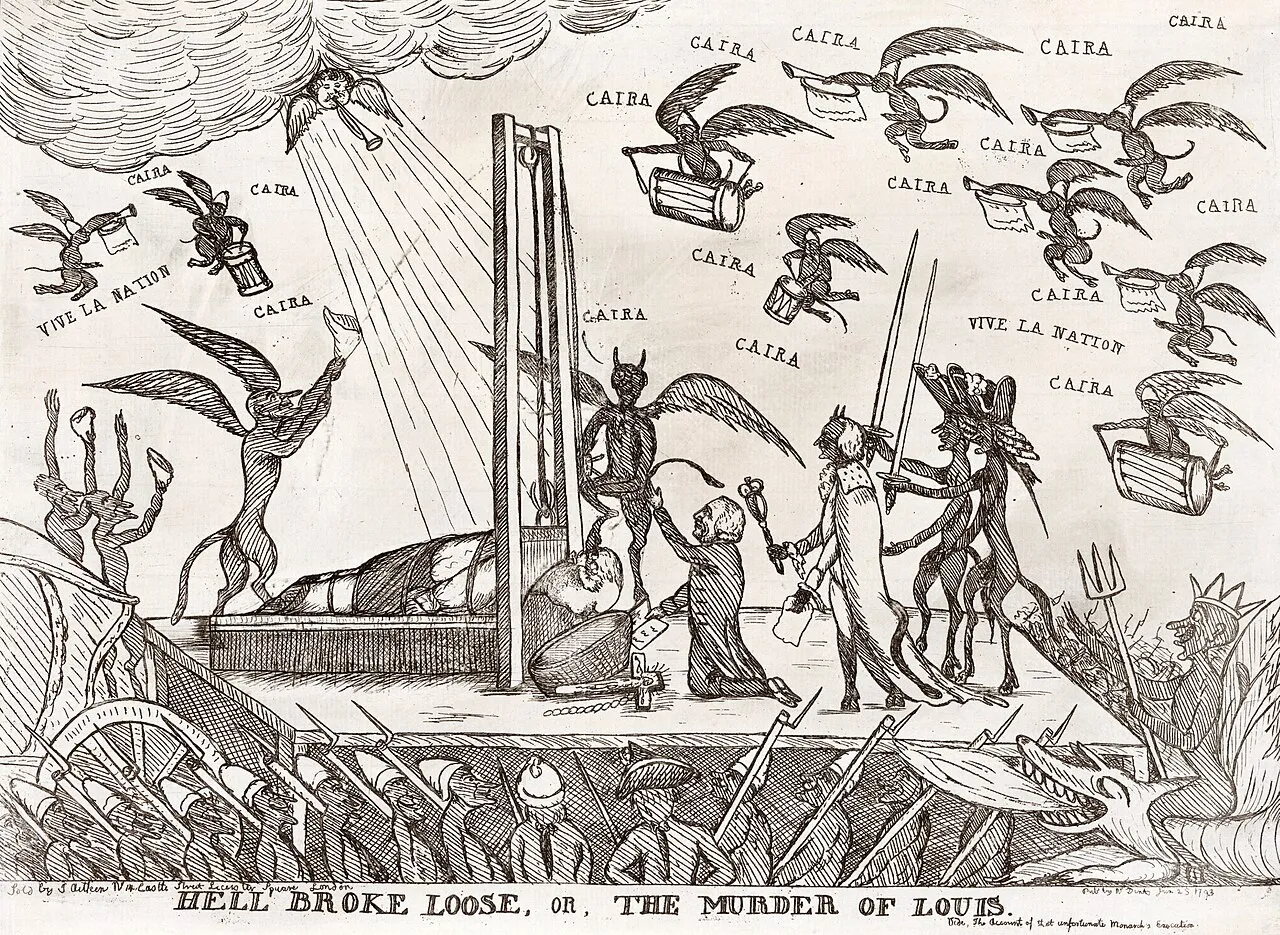
Marina Viotti and the Boat
To be honest, I didn't know anything about Marina Viotti before that day in 2024. Wikipedia will explain her life and work better than I can:
 Contributors to Wikimedia projects
She also has an official webpage:
 Marina Viotti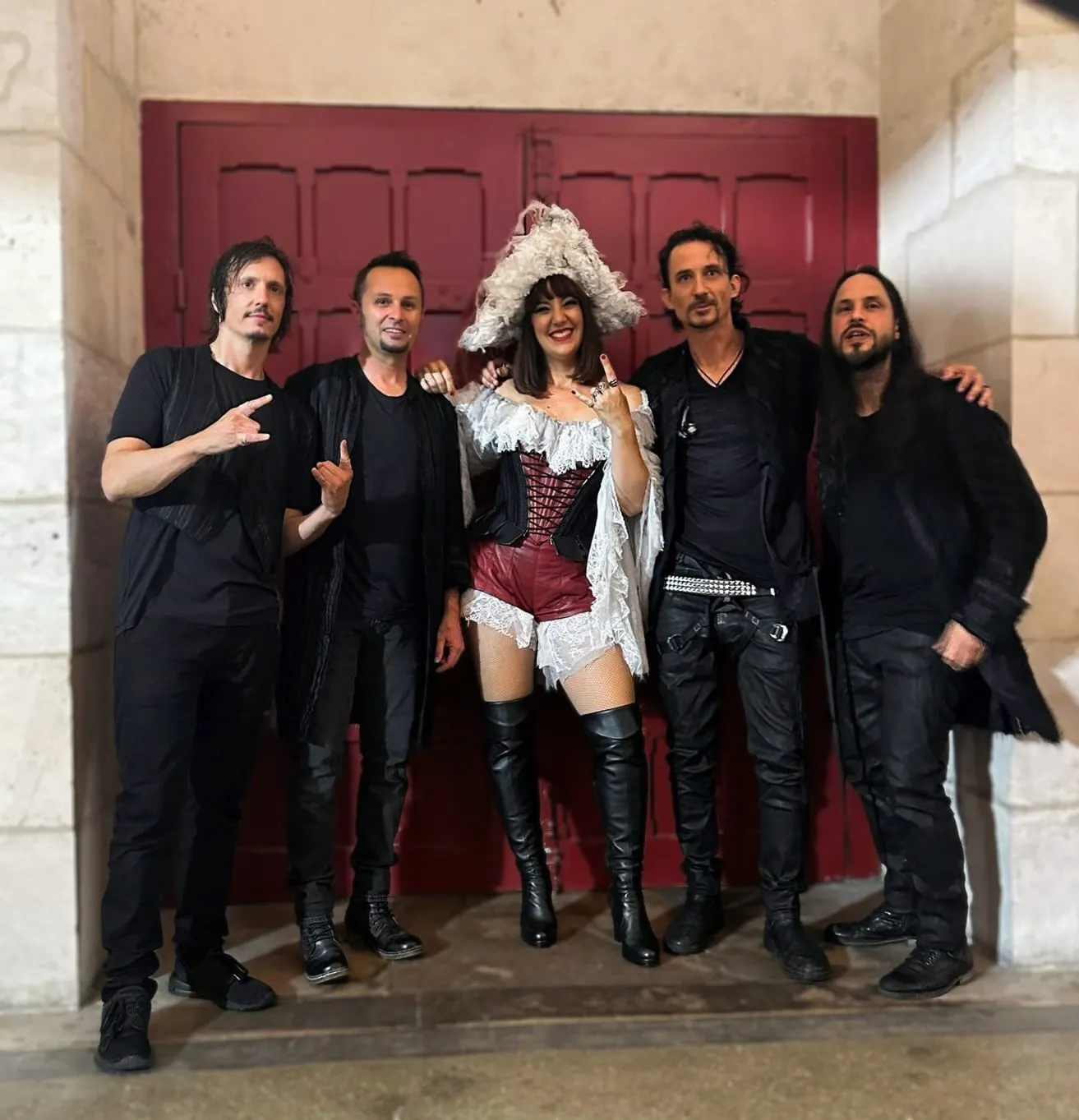
(fun fact: the picture in the preview above is of her and Gojira, taken right after their performance)
Many foreigners were confused as to why Marina Viotti was standing on an oddly shaped boat while singing.
Does it start making sense if I show you this?
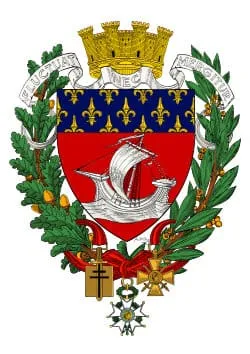
This is the coat of arms of Paris, and while there is a lot to say about it, the point today is that the boat is the symbol of Paris.
Blood
The performance ends with blood everywhere. Not real blood, just red strips and red smoke. I remember some people being shocked by this, but I think it's a good reminder that no revolution, or any major change in favor of the common people in any society, has ever succeeded simply by asking politely those in power (be they an aristocracy, bourgeoisie, oligarchy, or anything else of the sort).
If those in power focus so much on condemning violence during protests, it's not because they abhor violence (they use it more than anyone else; it's just not as visible) it's to weaken and extinguish the protest and the social movement.
Any resemblance to current events in the world right now (or lack thereof) is definitely no coincidence.
Yes, this song goes beyond historical reference. It is also highly political.
Conclusion
As far as I know, Gojira rarely plays this song live. However, they performed it at least once in Paris about a year ago.
Enjoy:
And, in case you had any doubts, yes, Marina Viotti is a metalhead. I always find it interesting that many fans of metal and opera are also fond of the other genre. I don't think this is a coincidence; the two genres have much more in common than many people realise. Personally, I've always considered Beethoven to be the inventor of metal. I could be wrong, though, maybe a composer before him did it first.
Fun fact: shortly after the opening ceremony, I made this with my daughter's and my Lego and I sent it to the band via Facebook:
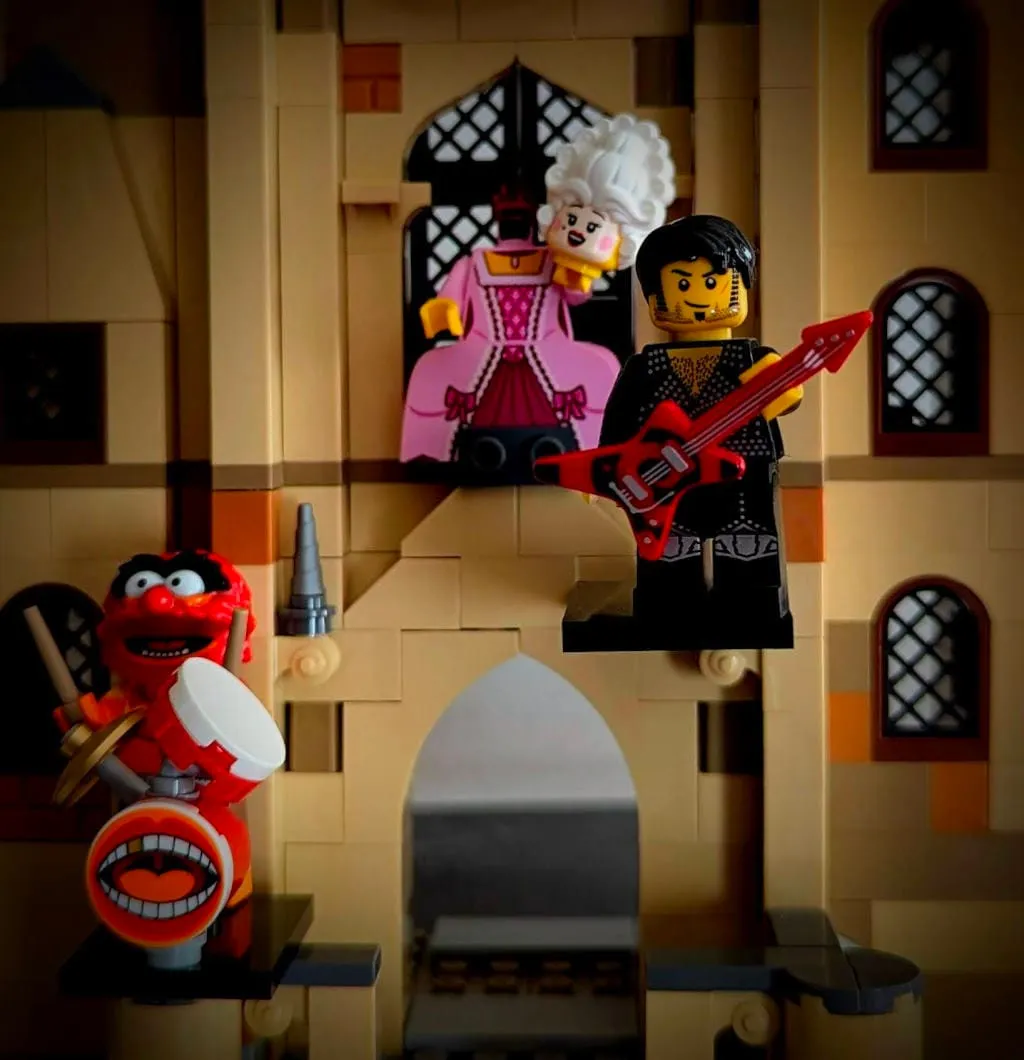
They liked it.

As always, if you enjoyed this post, please share it with your friends and contacts on your preferred platforms. It would mean the world to me, as would your subscription to the newsletter (it's free, although you can also help me pay the bills if you can afford it).
In this day and age, when you can no longer rely on search engines to be discovered, and when the web is becoming increasingly full of AI slop, it's more important than ever to know that you are read and followed by real humans. This is what still motivates me to write online.
Thanks for reading.
Until next time.
Best,
David


Comments ()