"Embrace・Shodoshima" by Wang Wen-Chih (Setouchi Triennale 2025)
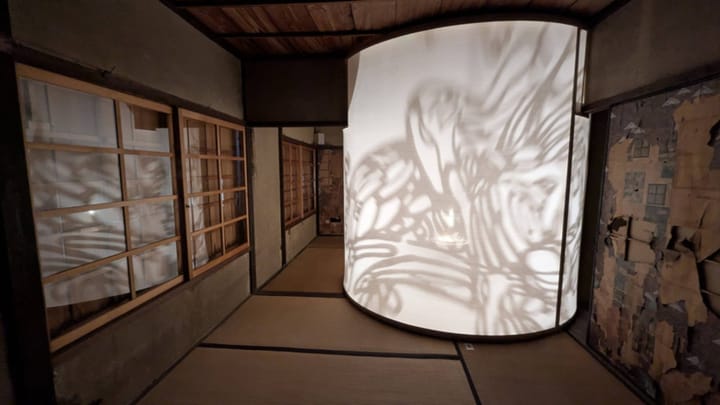
Wang Wen-Chih's "Bamboo House" on Shodoshima has always been a highlight of the Setouchi Triennale. This year's installation, titled "Embrace・Shodoshima" was no exception.
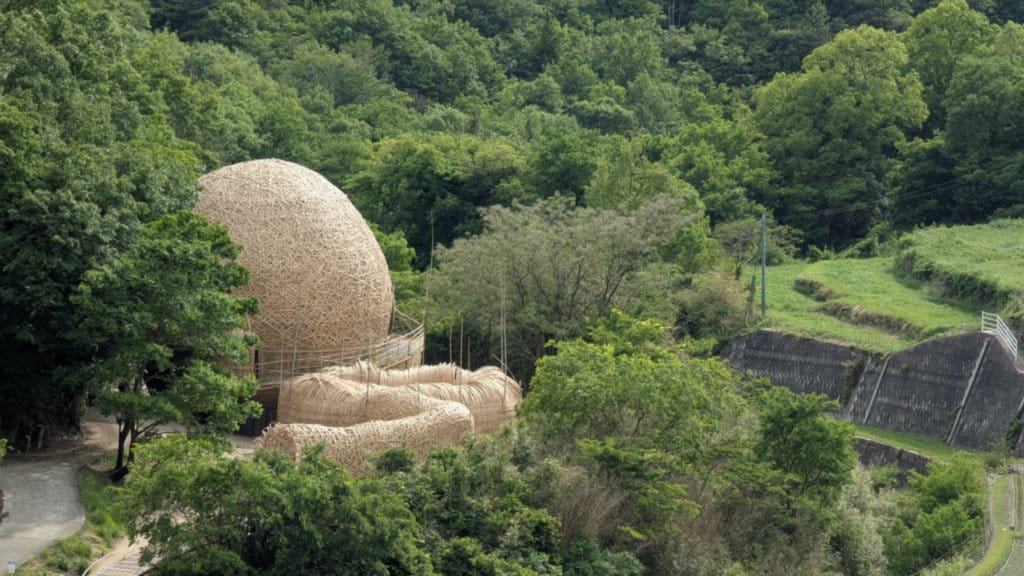
Since the first Setouchi Triennale, Taiwanese artist Wang Wen-Chich has come to Nakayama on Shodoshima every three years to delight us with one of his "bamboo houses," which are always a highlight of the festival.
The 2025 version, Embrace・Shodoshima, is not exception. How about we (virtually) visit it today?
But before we reach Nakayama, I want to show you something interesting that I found along the way from Ikeda.
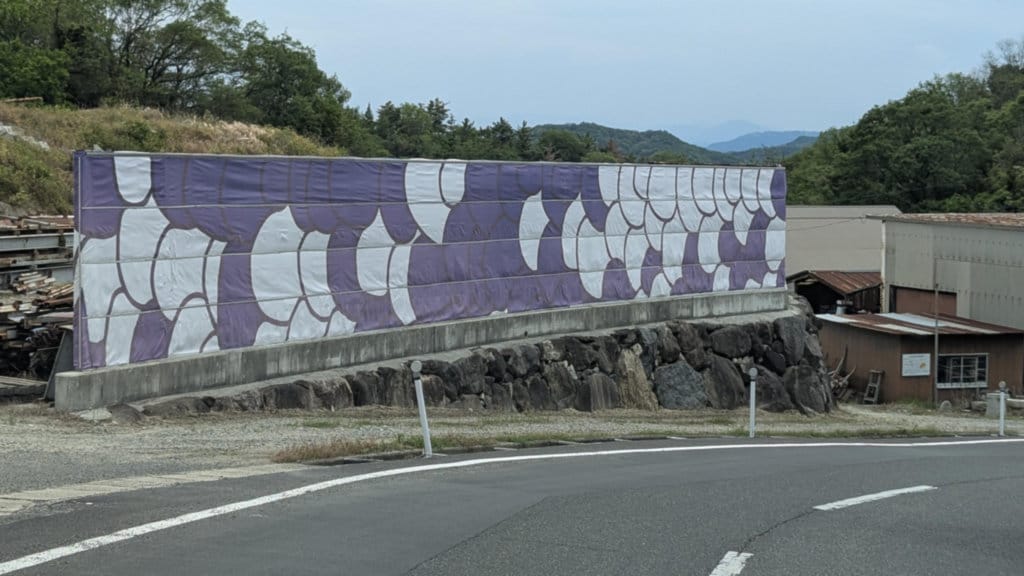
I often wonder what happens to temporary artworks after a Triennale ends. Some are destroyed (including Wang Wen-Chih's bamboo houses, which have a short lifespan by nature, one and a half years at best). Some end up in storage, to be reused at a later date or not. Since most are never reused, I like to imagine a big hangar in Kagawa that looks like the one at the end of Raiders of the Lost Ark. And some artworks have an unexpected second life after the Triennale. I was quite pleased and surprised to see this "tapestry/fence" on the side of the road.
This is an artwork from 2022 called Popstop by American artist Charles Worthen. It was designed to decorate a bus stop in the village of Konoura. To be honest, I didn't think it was that memorable, but it did its job of decorating the bus stop. I had almost forgotten about it until I stumbled upon it there. I think it's kind of fun that it has this second "career" over there. (Why there? No idea, but it's pretty far from Konoura.)
Nakayama is a small village in the heart of the island that is renowned for a few things. First, its kabuki theater (see the picture above). Shodoshima is a unique island for many reasons, one of which is that it has had rural community kabuki theaters for centuries (kabuki is usually an urban art). During the Edo period, almost every village on the island had a kabuki theater. Sadly, most of them were dismantled over time, and only two remain: one in Nakayama and another in Hitoyama, just two kilometers downhill. They are still used today! Also, if you visit Shikoku Mura in Takamatsu, you'll find a reconstructed kabuki theater that previously stood somewhere on Shodoshima.
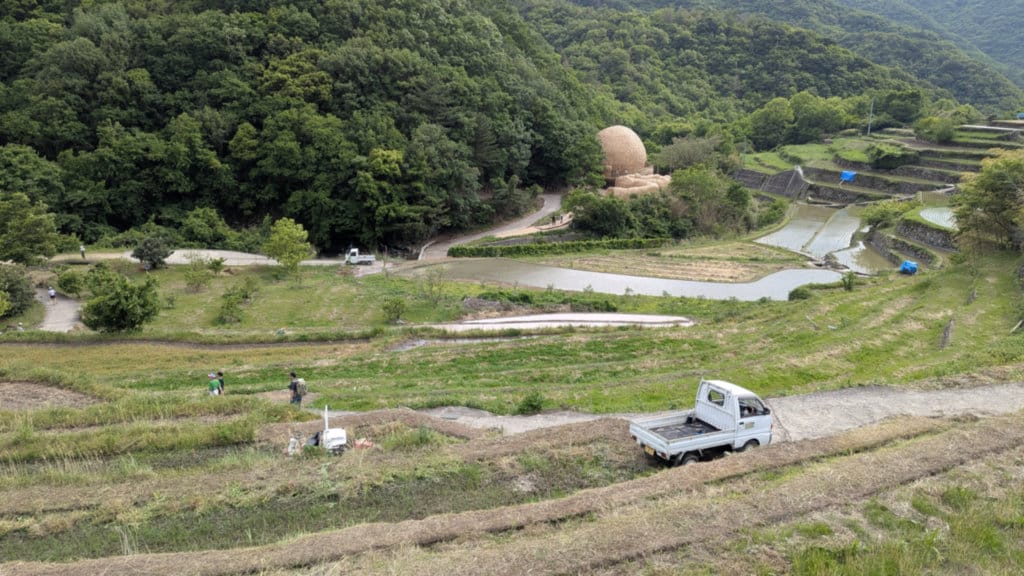
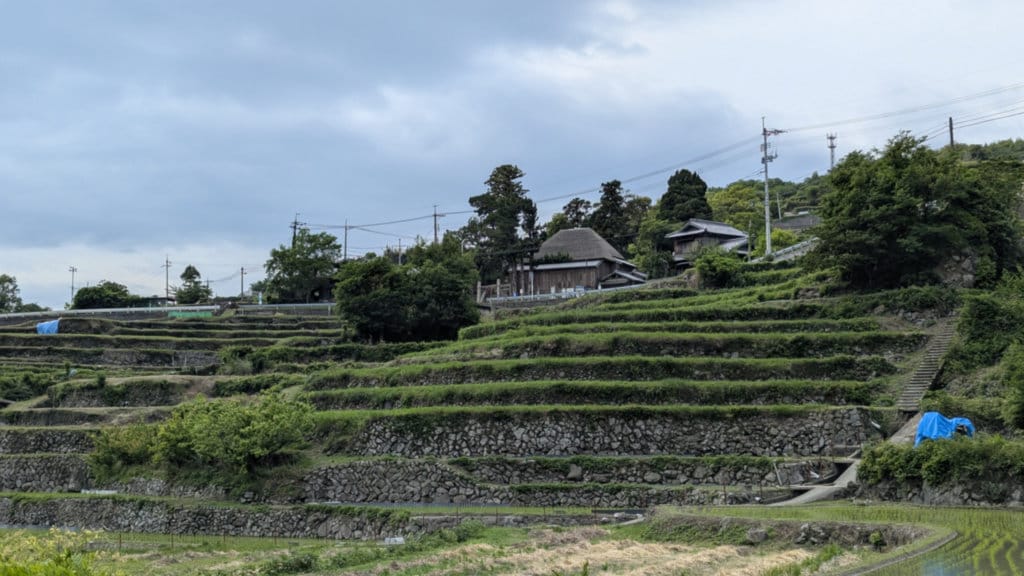
Nakayama is also renowned for its "thousand rice fields." It's the only place in the region with terraced rice fields. While there aren't actually a thousand fields (there are between 700 and 800), they make the valley stunning, especially when the rice is growing.
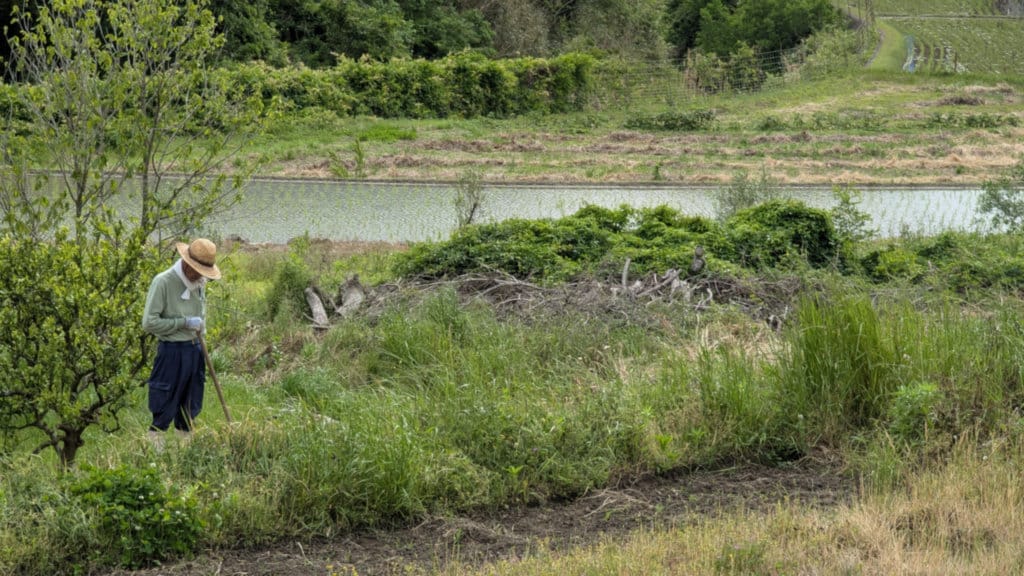
Since these pictures were taken in the spring, the fields were just about to be planted, as you can see in the three pictures below.
The third reason Nakayama is a must-see when visiting Shodoshima is, of course, Wang Wen-Chih's art, at least during Triennale years. (As of January 2026, I'm pretty sure Embrace・Shodoshima is still standing, but probably not for long.)