
"Weaving Time" by Motoi Yamamoto (Utazu, Setouchi Triennale 2025)
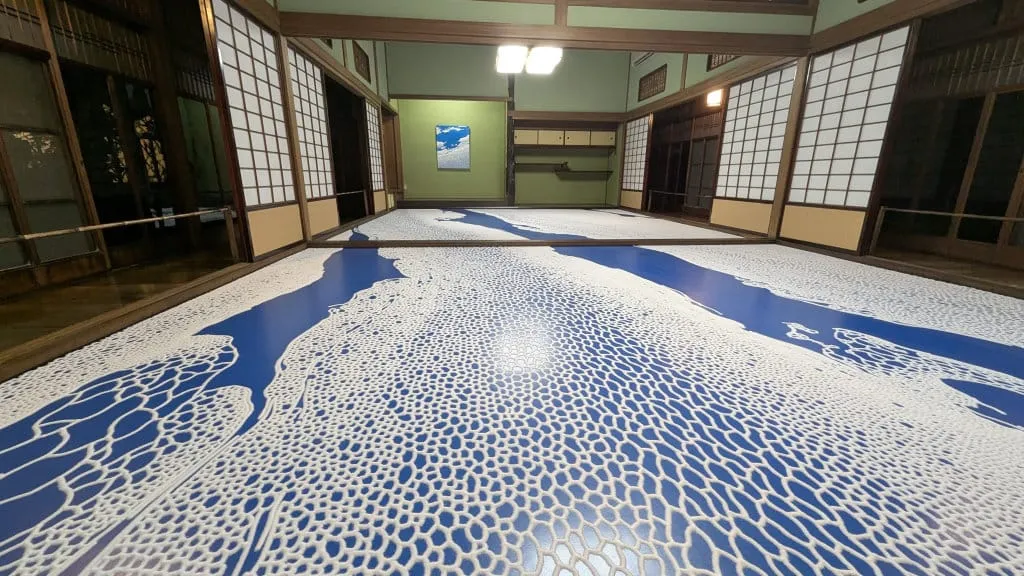
Today, I want to introduce a stunning artwork that sadly no longer exists. I hope you had the opportunity to experience it if you attended the Setouchi Triennale 2025 during the autumn session last year.
As the title suggests, it was called "Weaving Time" and was created by Japanese artist Motoi Yamamoto.
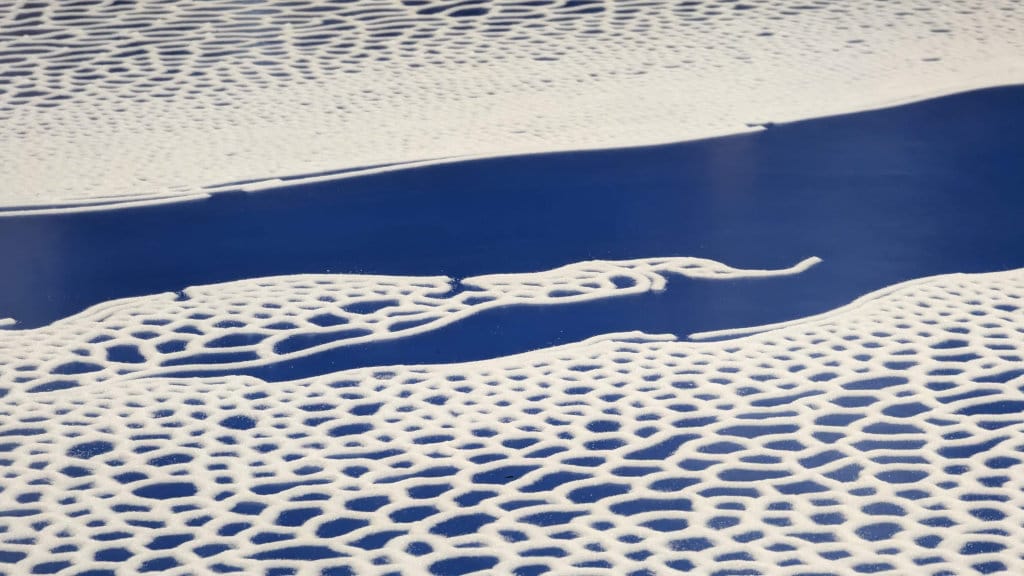
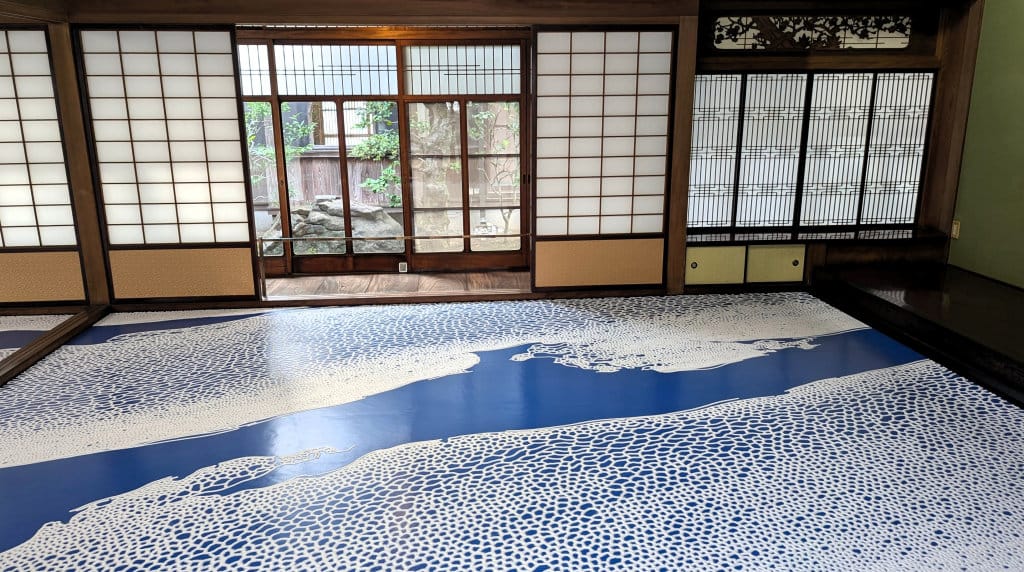
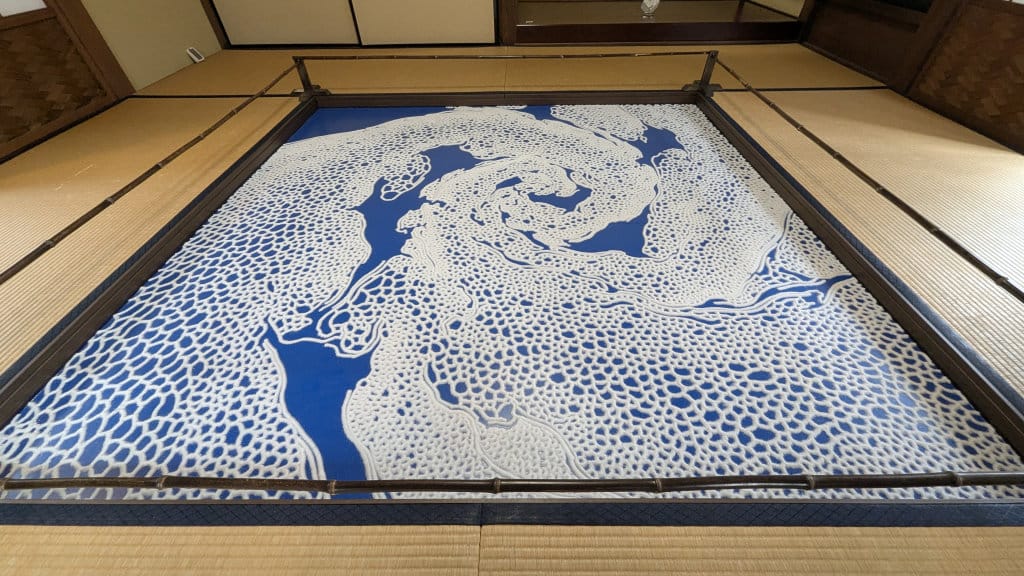
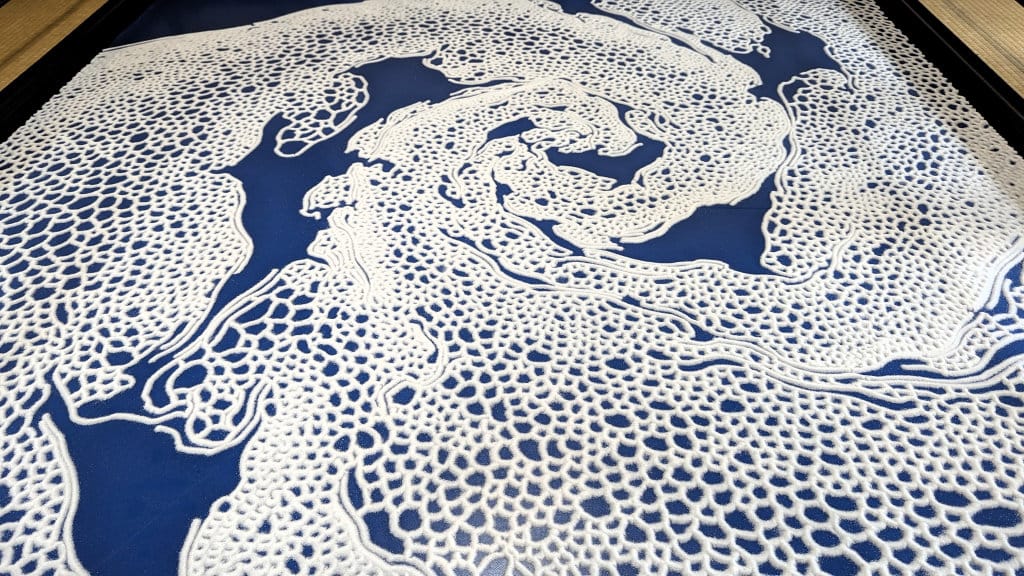
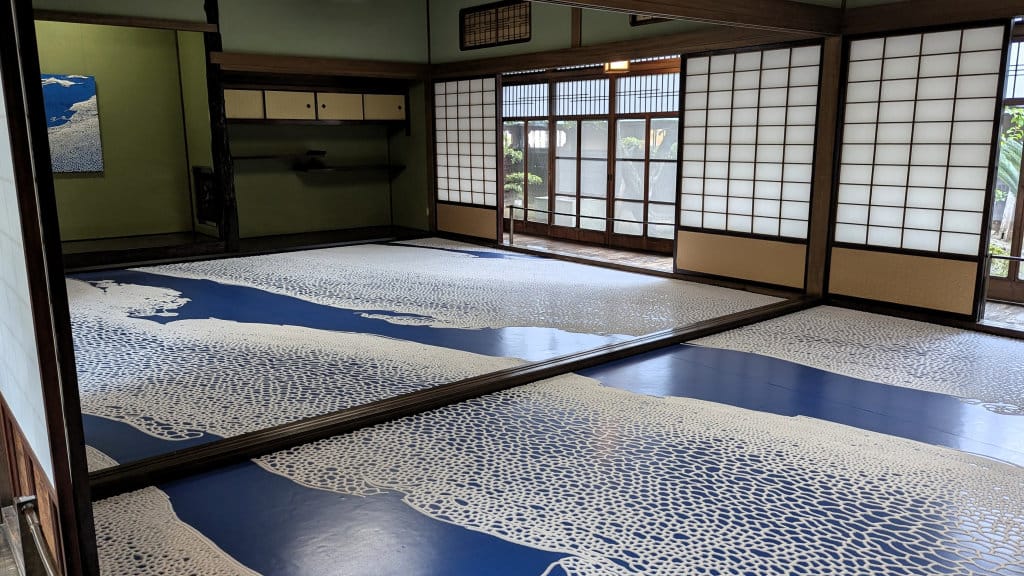
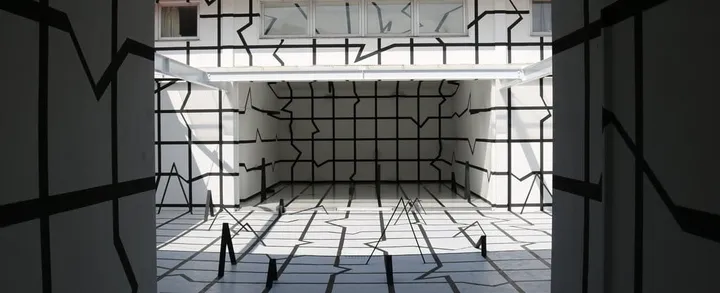
There were two installations and a few smaller pieces, but the main one is the one pictured above and below.
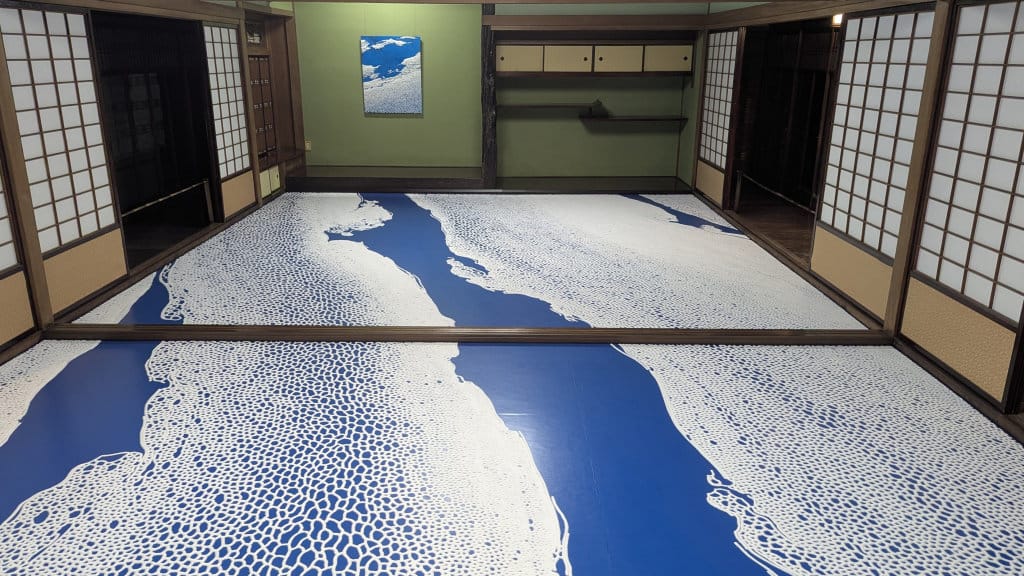
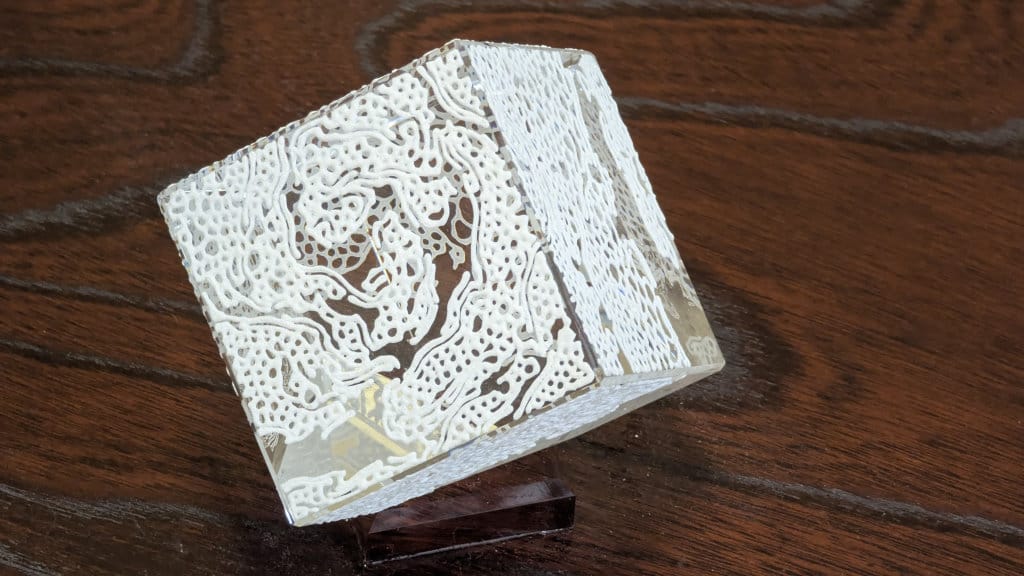
It's made of salt!
All the white parts are made of salt that the artist carefully and painstakingly laid on the blue surface.
He started working with salt for a very sad reason. He lost his younger sister in the 1990s, and he started drawing with salt to cope with his loss. He chose salt because it symbolizes purification in many aspects of Japanese culture, including funeral rites.
It was only supposed to be for one installation, but he never stopped, and it became his material of choice.
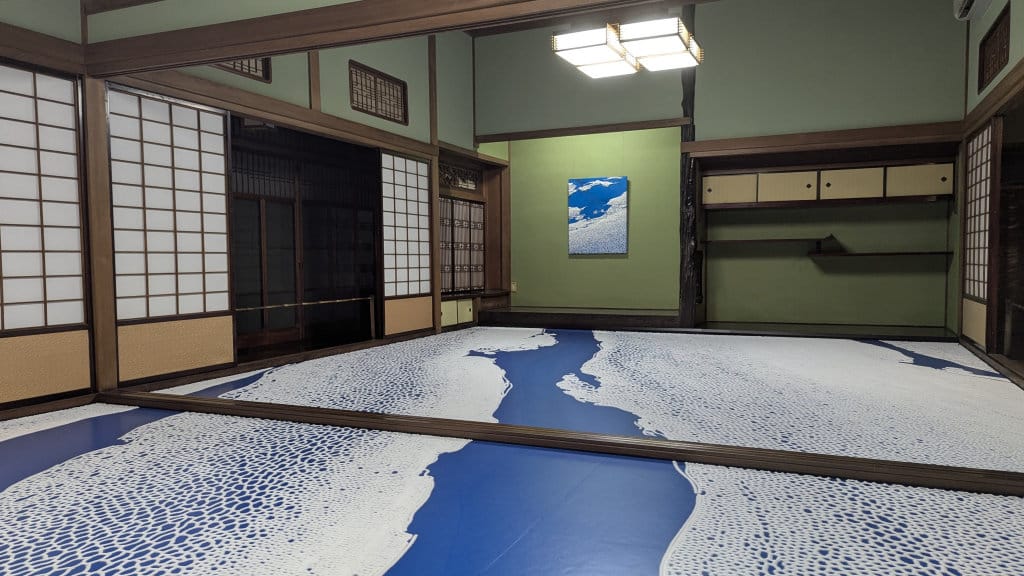
It's hard to imagine how much work went into it, and the most incredible part is that it was temporary artwork that only lasted through the autumn session.
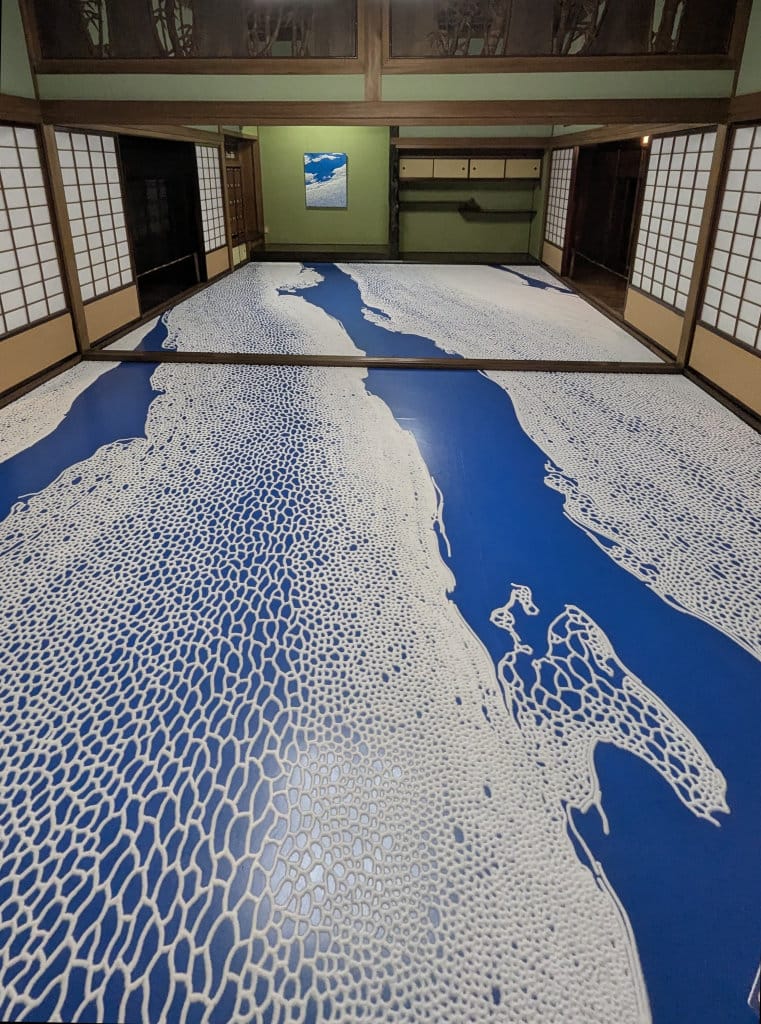
It was also very difficult to take good pictures of it, unless you're a professional photographer not concerned with other visitors being in the same room but hopefully not in the shot.
It's one of those artworks that needs to be experienced in person, not just seen online.
(I know I tend to focus on those types of artworks here, but my goal is to make you want to come. And much better pictures than mine can usually be found of permanent artworks or simply "visual" ones.)
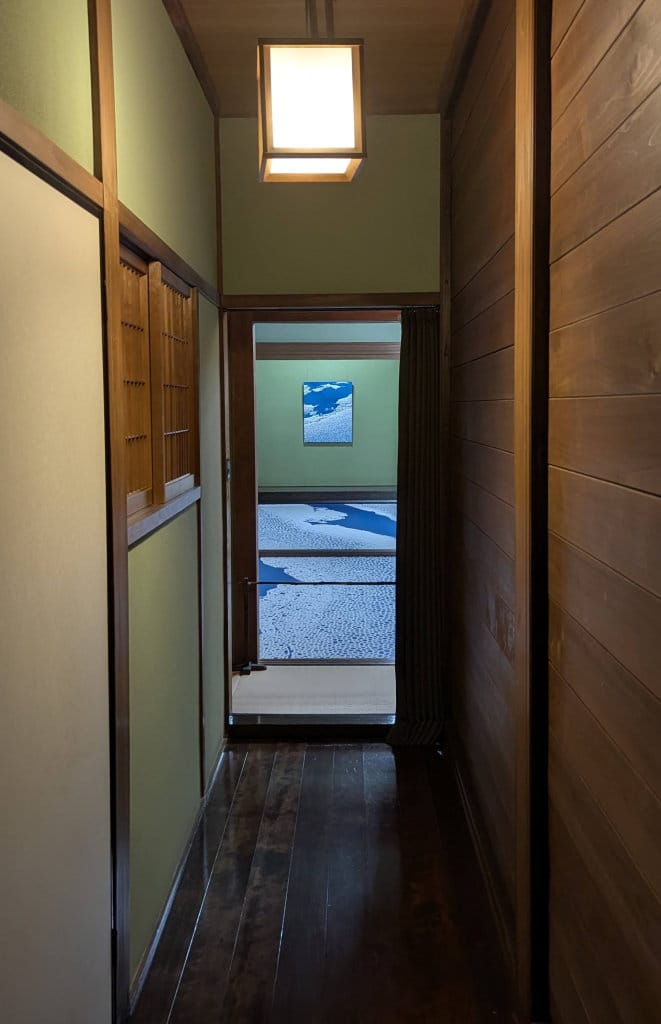
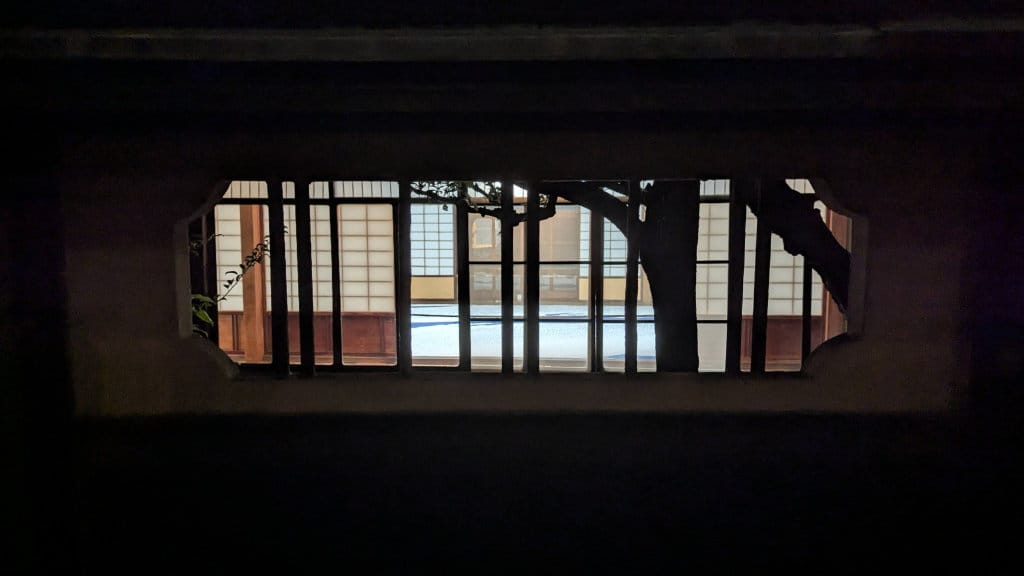
I'd also like to mention a few things about the location. It was located in a beautiful traditional house called Kura no Yakata Sankaku-tei, in the town of Utazu.
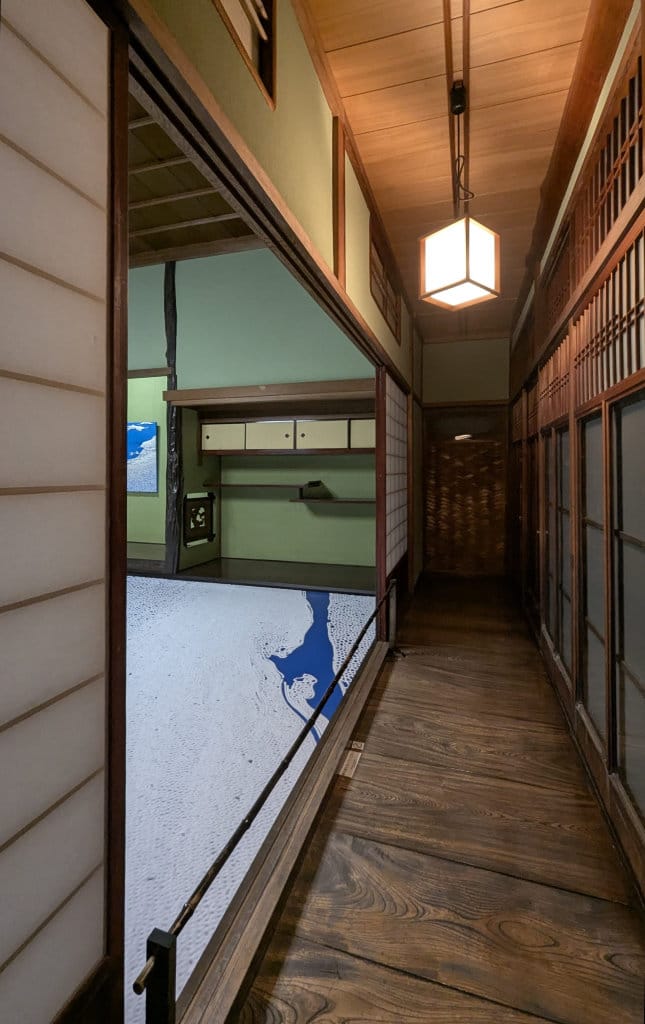
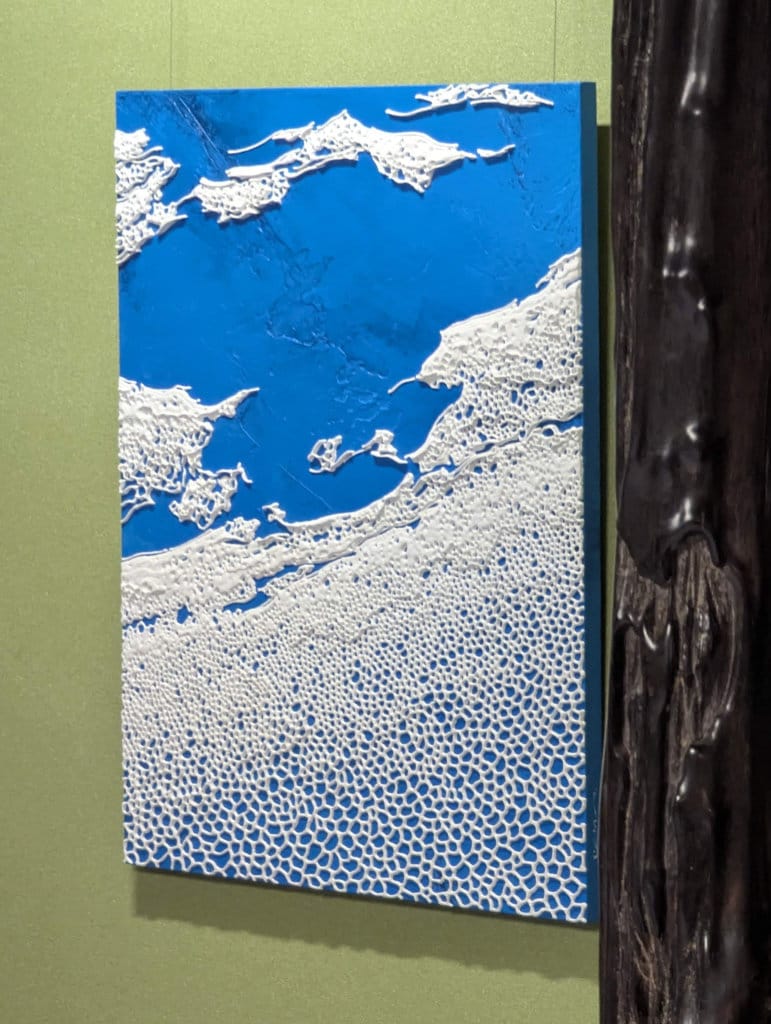
It was the first time the town of Utazu participated in the Triennale, and I was initially confused about that. Everything I knew about the town came from what I saw on the road between Sakaide and Marugame: a few uninteresting apartment buildings and US-style shopping malls. However, Utazu has a secret: a stunning old quarter with some of the most beautiful streets in Kagawa (excluding the islands). Don't overlook it if you come to Kagawa!
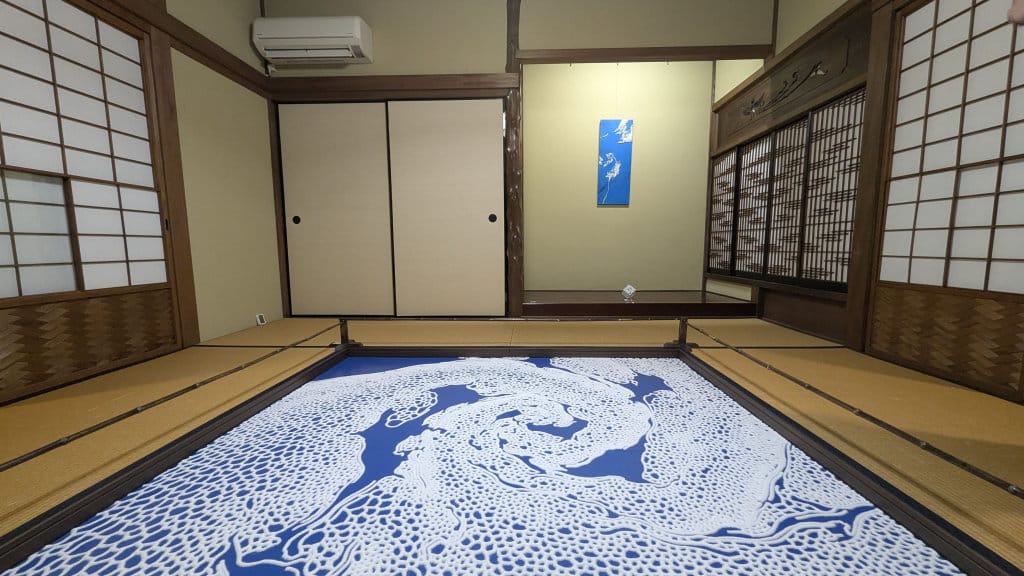
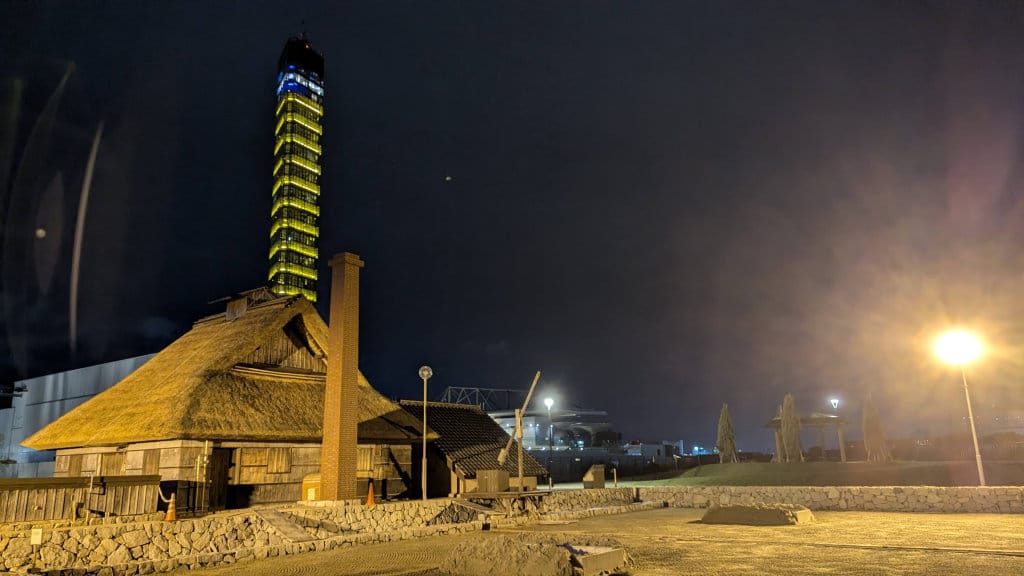
Moreover, it was fitting that "Weaving Time" was in Utazu because the town (and the whole area, really) was famous for its salt fields before the state closed them after the war. Then, sadly, Japan's love story with concrete started and the entire coast was covered with it as well as with factories, industrial ports, and, in the case of Utazu, shopping centers.
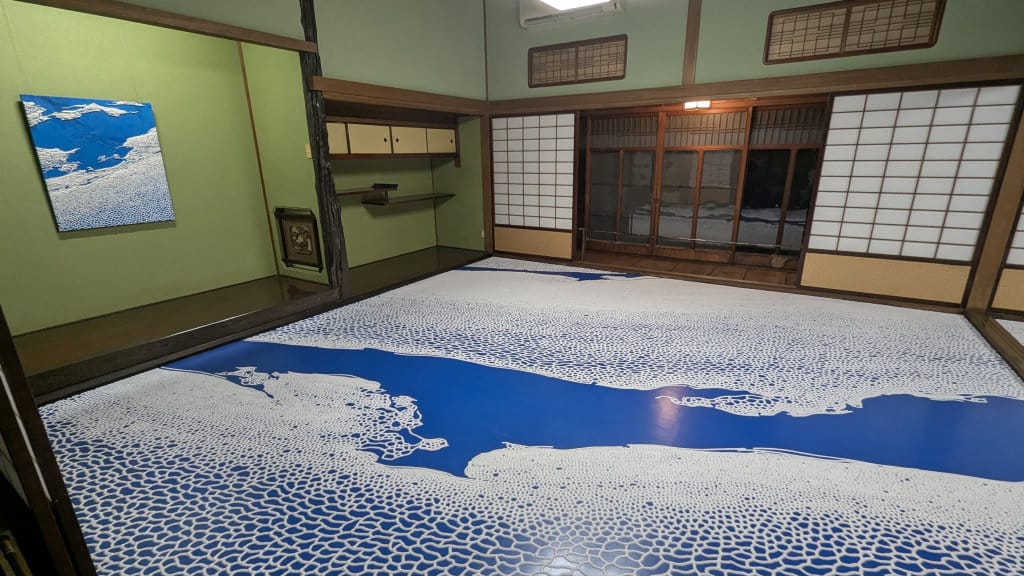
Another interesting thing about the art in Utazu during the Triennale is that, unlike other locations, it wasn't dependent on ferry schedules, and the art venues were open until 8 p.m., which was a great opportunity to go at night.
"Weaving Time," being indoors, didn't make a huge difference (if you look carefully you can see that some pictures were taken during daytime and others at night - I went twice). However, walking in historical streets at night always feels magical.
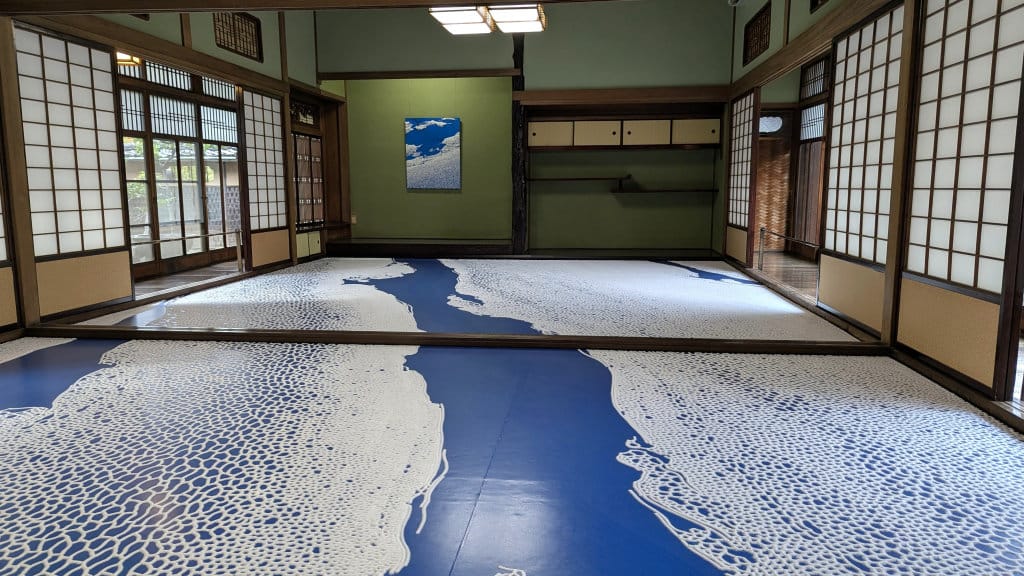
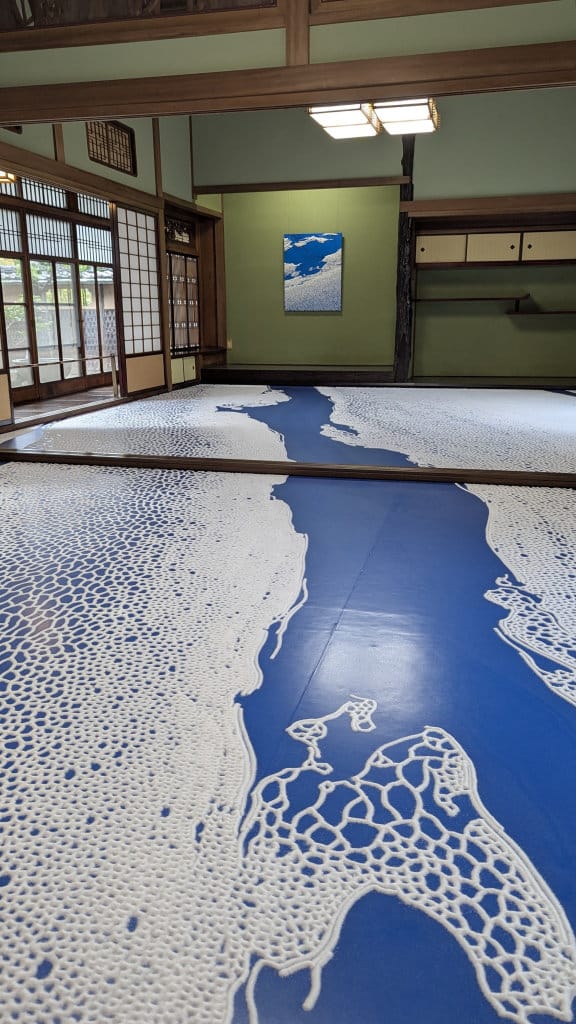
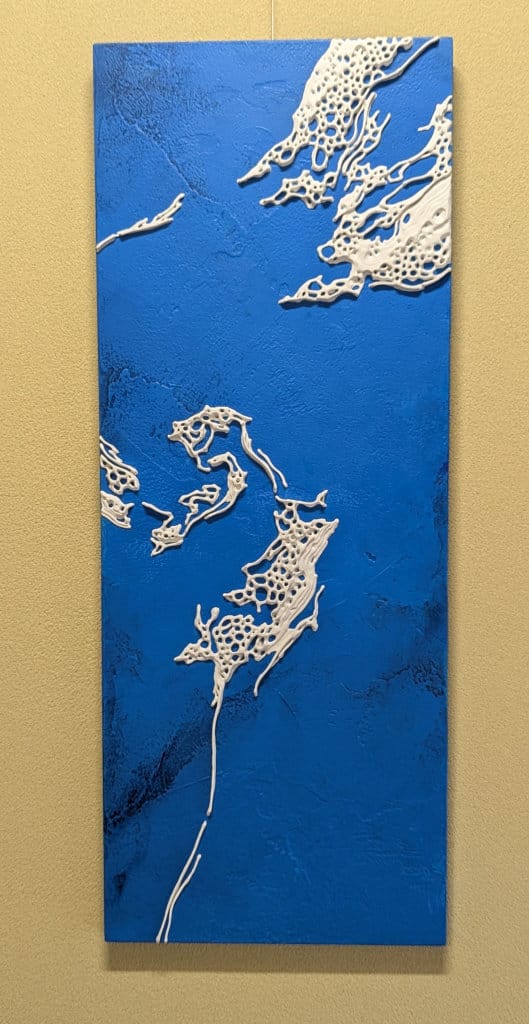
Not only are most of Motoi Yamamoto's works ephemeral, but they all end the same way: by "returning the art to the sea."
Yamamoto explains this himself on his website:
 COWBELL
In any case, even though you'll never be able to see Weaving Time, don't miss Yamamoto's art if he ever has an exhibit near you.
He's also quite active online. His website has a lot of English content. I don't know if he's bilingual or has a good translator. He's also active on Instagram.
- His website.
- His Instagram account.
- His YouTube channel (it's not very active, but it has some great videos where you can see him work).
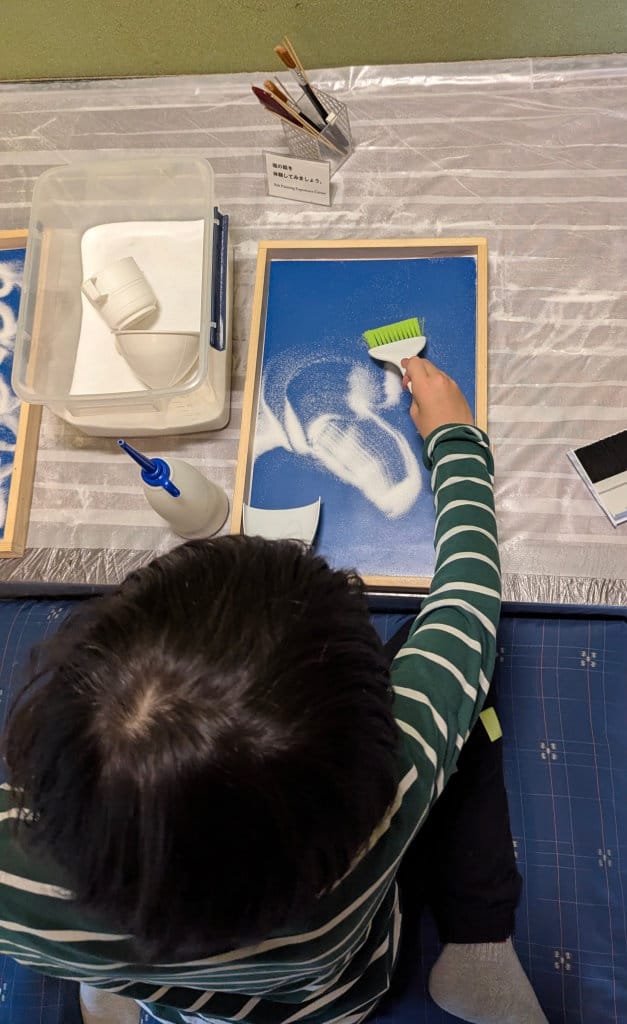
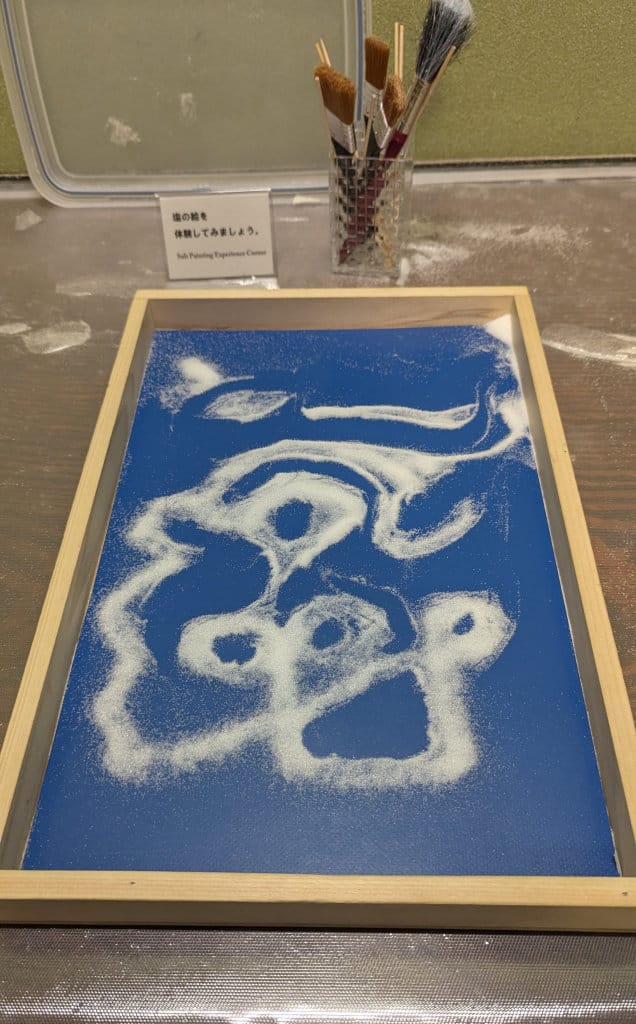
Using the same techniques as Yamamoto, it was possible to try drawing with salt. I must admit it was quite fun, but not that easy. I can't imagine creating anything on the scale of his works.
In other news:
An interesting article about Lee Ufan and Naoshima in the Guardian:
 Alex Needham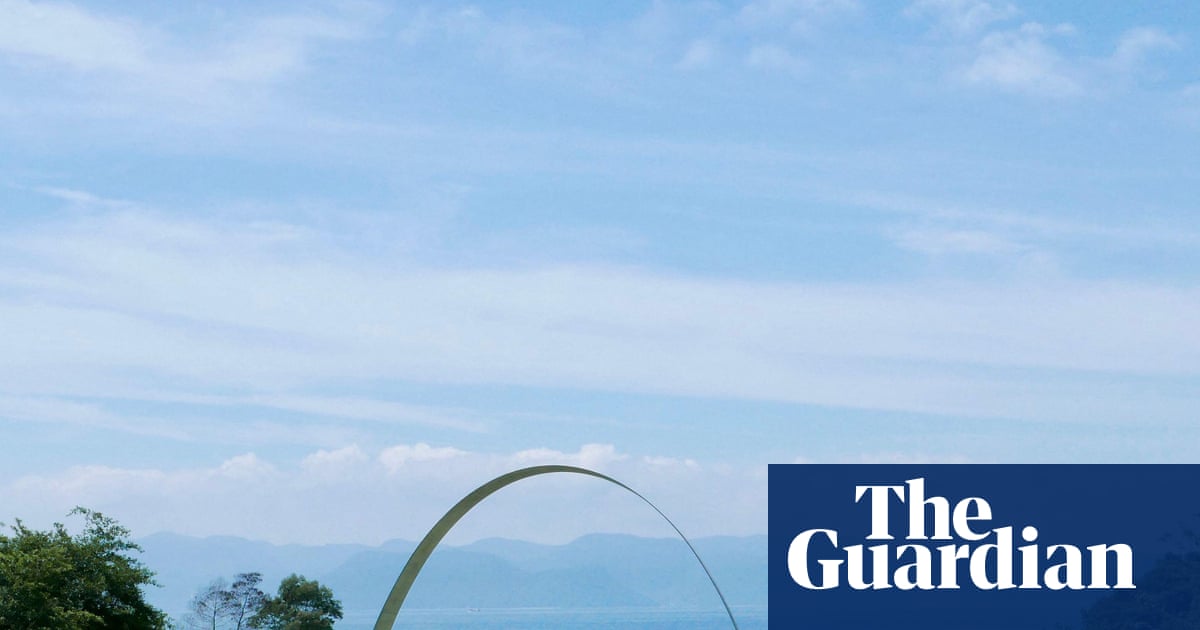
That's all for today. If you liked this post, please share it with your contacts and loved ones. Also, if you haven't done so yet, you can subscribe to the newsletter and receive future posts directly by email.
As always, thanks for reading.
Best,
David
Comments ()