
Machiya in Takamatsu
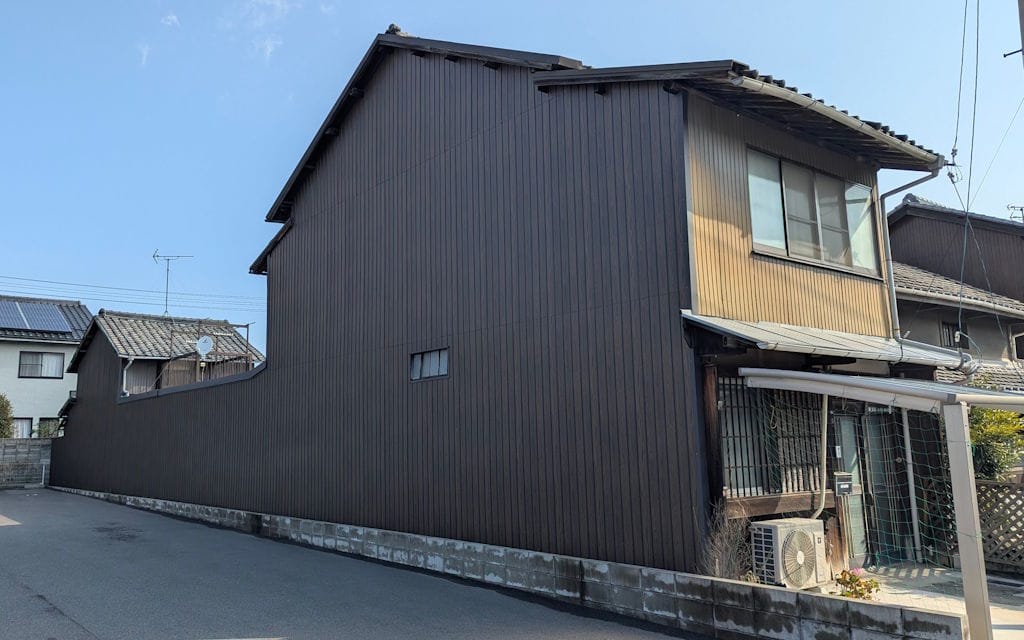
Today, a very brief post about a "machiya" I encountered this morning.
Machiya are traditional Japanese townhouses. They used to be found all over Japan and were nothing exceptional. However, they have been slowly disappearing for a few decades now, and the regular ones (not historical buildings or such) may be gone in our lifetime.
They are characterized by being very narrow and long. The reason is very simple and mundane. In the past — I can't tell you exactly when — the amount of property tax an urban homeowner paid was based on the length of the side of the house facing the street. In response, houses were designed to be as narrow as possible. Since the length of the other sides didn't matter, they became as long as possible, too.
It's not something that's easily perceived when walking down a street full of houses, but because machiya are disappearing, you sometimes find one with no neighbors, like the one above. This allows you to see the house in all its length.
I like this one because we can also see its basic structure: a main building in the front, a small garden in the middle — often with a small corridor on the side — and a smaller building in the back.
This is what the house looks like when facing it:
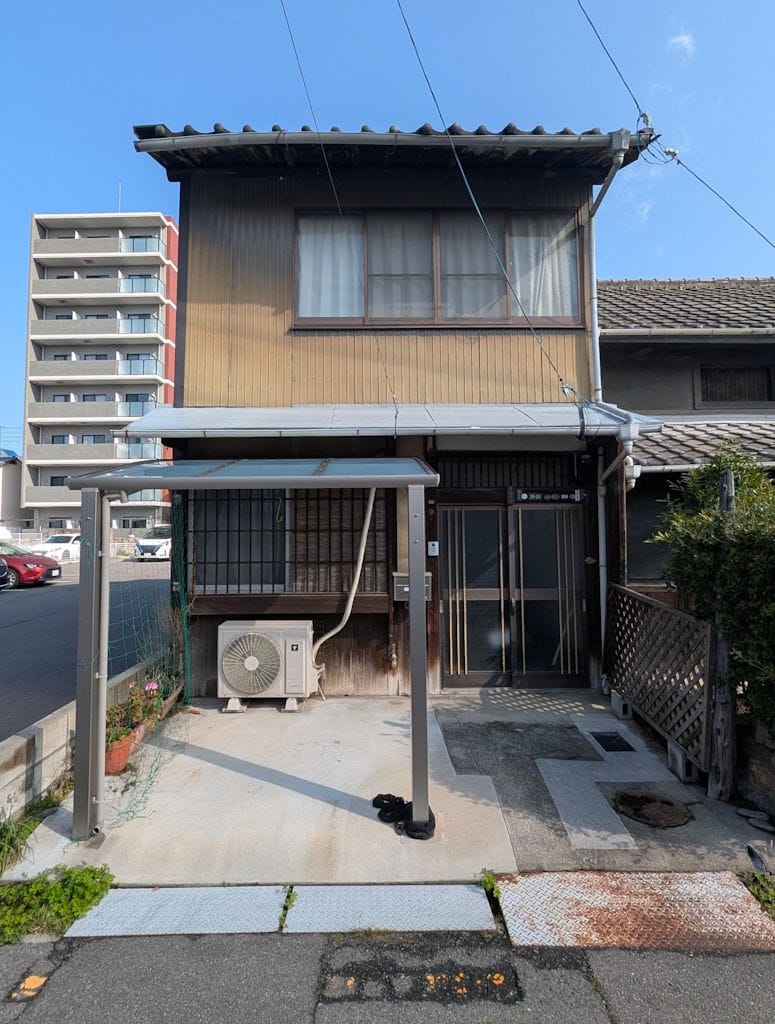
As I said, they are slowly disappearing, but if you look closely in some older neighborhoods of Japanese cities, you'll still find some.
In Takamatsu, for example, you can find them in two different parts of town. One is in Busshozan, a few kilometers south of the city center. This area is known as the historical part of Takamatsu. It used to be a separate village, but an important one because Honen-ji, the temple linked to the Matsudaira family (Takamatsu's feudal lords during the Edo period), is located there.
The second neighborhood, where the pictures above were taken, is almost downtown. Located between the university and the sea, it is what remains of Takamatsu's old downtown area. Remember that the main reason there aren't many old buildings in most Japanese cities is that these cities were razed to the ground by the Americans during World War II. While we often focus on the destruction of Hiroshima and Nagasaki because of the historical significance of the atomic bombs, many more cities were almost entirely destroyed by "regular" carpet bombings. These bombings often used incendiary devices that spread death and destruction very efficiently in cities full of wooden buildings squeezed together.
On July 4, 1945, Takamatsu was the victim of such a bombing. Up to 80% of the city's buildings were destroyed. Somehow, this neighborhood was one of the few close to the center that was spared.
It's far from fancy, but I love walking through it because it still has the feel of prewar urban Japan. It has the "chance" of being crossed by not one, but two railroads, which makes it quite unattractive to developers. While the machiya are slowly being replaced by more modern houses, the neighborhood is mostly spared from construction of large apartment buildings, shopping areas, and the like.
It still has a few houses dating from before the war. Sadly, the most interesting ones are located on a narrow street with heavy traffic. It used to be the major street to Sakaide until bigger, more modern roads were built. Because of the traffic (and the lack of sidewalks), it's difficult to walk there and take pictures. Difficult, but not impossible. I really need to give it a try one of these days.
Well, that's pretty much all for today.
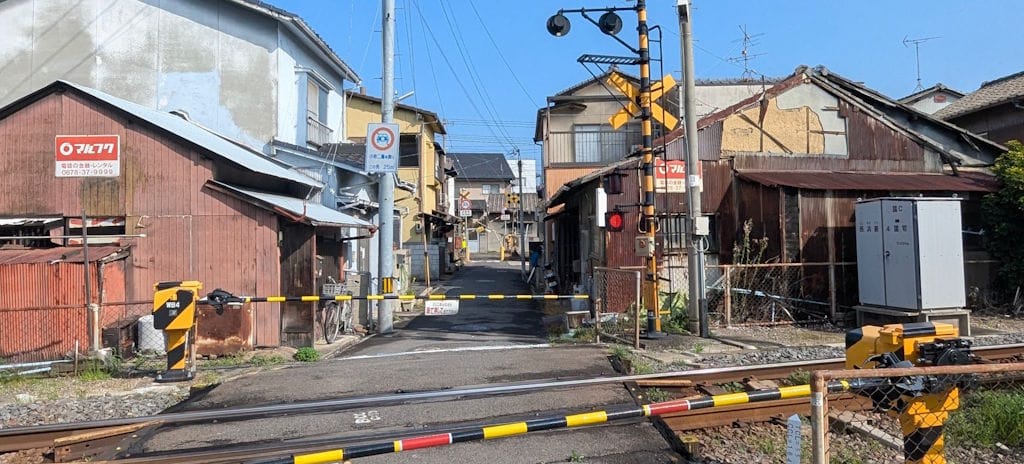
I'll leave you with a bonus picture of a tiny railroad crossing for pedestrians and bicycles. Really, this is how wide most streets in the neighborhood used to be.
As always, thanks for reading, and do not hesitate to share the post with your friends and family if you found it interesting.
Best,
David
Comments ()