
Happy Bastille Day?
A while ago, I had a blog called Ask a Frenchman. The following post is from that blog, but since it's no longer online and it's July 14th today, I thought it would be a good idea to republish it here.
Enjoy!
Today is the perfect day to tell you a little bit about Bastille Day.
After being surrounded by English speakers for many years (most of my adult life, really, even here in Japan) I've noticed that many of them have misconceptions about Bastille Day, especially concerning how it's celebrated in France.
Let's debunk these misconceptions and explain things a bit.
Is Bastille Day the French Independence Day?
Well, yes and no.
But really, no.
While Bastille Day can be seen as an equivalent to an "Independence Day" for countries that have one, it's only because they are roughly equivalent in importance and symbolism. They can be seen as the "nation's holiday."
But that's pretty much where the similarities end.
First, it's not the French Independence Day because France was never a colony and thus never had to become independent. It's not the nation's founding either. Depending on the chosen criteria, the date of France's birth may vary, but it's usually considered to be August 10, 843, with the Treaty of Verdun.
Which event is commemorated on Bastille Day?
If you don't know the answer to this question, it's time to open a French history book.
All right, since you insist, here is the answer in a nutshell:
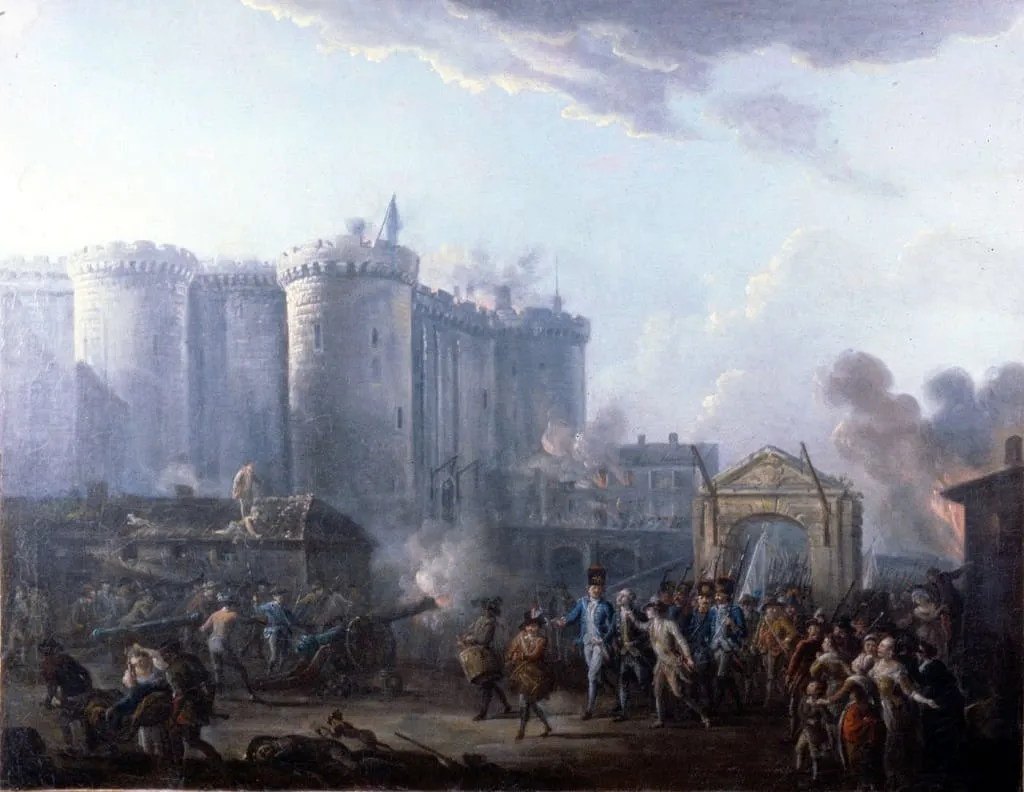
It celebrates the day the French Revolution officially started with the storming of the Bastille, the royal prison at the time. This day was July 14, 1789.
By the way, the Bastille fortress has long since disappeared (it was destroyed shortly after being stormed, and its stones were used to pave streets and build the Pont de la Concorde). So, when you go to Paris and visit Place de la Bastille, don't embarrass yourself by asking people where the fortress is. Don't laugh, but I was asked that question when I lived in Paris. I've also overheard foreign tourists in the subway "planning" a visit.
However, if you look carefully at the ground while you're there, you can see the outline of where the fortress used to stand (hint: it's near the end of Rue Saint-Antoine and Boulevard Henri IV). You'll also find the outline on the floor and part of the counterscarp on the platform of line 5 of the metro (Bastille station, obviously).
Some of my compatriots like to be technical and nitpick. They argue that Bastille Day actually celebrates the Fête de la Fédération, which took place on July 14, 1790, to commemorate the first anniversary of the Storming of the Bastille.
Then thing is that Bastille Day became an official holiday in 1880, though several more or less official celebrations had taken place between 1790 and 1880. In order to pass the bill and gain approval, some lawmakers argued that we should celebrate the Fête de la Fédération because it was a joyful day, whereas Bastille Day was bloody and violent. This made some lawmakers less resistant to the idea. So, yes, when it was voted, the French holiday of July 14th celebrated the Fête de la Fédération.
However, I strongly believe that on such a day – nothing less than the nation's holiday – what matters is what it represents to the people, not the argument used by a lawmaker (We're not in an American courthouse here, where meaning is in the technicalities.)
Why do French people look at English speakers funny when the latter wish them a "Happy Bastille Day" on July 14?
There are two reasons.
First, in France, people don't say "Happy this or that" for every holiday. Christmas and New Year's are the only two days I can think of when people greet each other with a special "Happy something." (Maybe religious people also say it for certain religious holidays? I'm not sure).
Second, unless a French person can speak English, they won't know what "Bastille Day" is.
Spoiler alert: it's an English-only expression.
In France, the day has two names:
The official name is "la Fête Nationale," which translates to "the National Holiday."
The more common name is simply "le 14 Juillet" (July 14th).
So, if you really want to wish a French person a "Happy Bastille Day," the best way to do so is to say "Happy July 14th" ("Joyeux 14 juillet" in French). But, once again, it's very rare to hear such a thing from a French person.
How do the French celebrate Bastille Day?
They usually do a number of things.
However, since it takes place in July, many children are on summer vacation and many adults are on holiday too. This means that, in many cases, they might not celebrate it at all. Overall, it’s not as big of a deal as national holidays in some countries can be.
I rarely celebrated it myself. Most years on July 14, I was either road-tripping across Europe with my parents as a child or teenager or vacationing at the beach as a child, teenager, or young adult.
Another thing to mention is what French people don't do on that day. They don't have barbecues or similar events. Whether or not you celebrate it, Bastille Day is not a holiday involving food and/or special gatherings. Yes, a French holiday that doesn't involve food. They do exist.
Of course, you'll always find people who will have a barbecue on that day. It's not forbidden. I'm only talking about traditions and cultural practices here. Since July 14 is in the summer and almost everyone has the day off, barbecues are bound to happen in some households.
So, what do French people do then?
First, in the morning, there is:
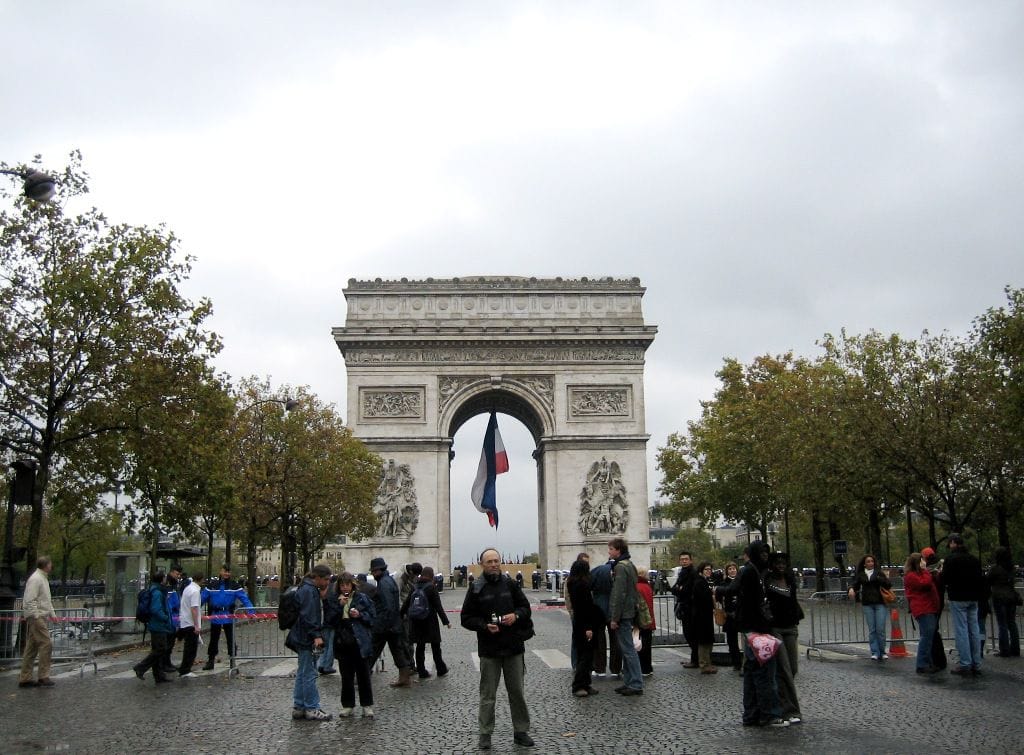
The big military parade on the Champs-Élysées in Paris.
(and possibly smaller ones in other towns).
Many French people watch it on TV. Tourists who are in Paris also go to see it. I doubt many Parisians bother to go to the Champs-Élysées to watch it. When I lived in Paris, I went to the Carrousel Garden once to watch the planes fly over me, but that was pretty much it. Sometimes, I walked around the area after the parade because there were always interesting pictures to take. I wasn't technically celebrating. I was more curious to see an event I had watched on TV a few times before with my own eyes (my mom loves watching the parade for some reason, so I watched it with her on TV quite a few times in my younger years). Honestly, I found what was happening around the event much more interesting than the parade itself.
I’ll post pictures if I find them (since was in the late 2000s).
After the parade, the president typically hosts a garden party in the Élysée Palace gardens. However, since it only involves about 500 people, we can’t say that it's "what French people do on that day".
Nothing special happens during the afternoon. People do whatever they do on a summer day off.
Two important things happen at night:
- a ball (I mean, the dance party, not the spherical sports artifact)
- and fireworks
Please note that in some cities and towns, these events actually take place on the 13th. Since people don’t have to work the next day, they’re more likely to go out. Some people do work on July 15. In less urban areas, two towns located near each other may hold the event on different days so they don't compete with each other and more people can attend both events.
The Ball
It may be one of the most enduring traditions of July 14th. Balls are organized in almost every city, town, and village in France. People gather to dance, drink, chat, and meet others. In big cities, several balls may be organized in different parts of town. A few years ago, I thought this tradition was dying out. I couldn't have been more wrong. After doing some research, I discovered that it’s alive and well.
I’m not sure what the origins of this tradition are. I think it goes along with the imagery of the French Revolution. Especially the myth that the people were so happy and relieved to be free from the king’s oppression that they spontaneously started dancing everywhere. While it’s obviously a myth, it was probably more common to dance and sing in the streets back then, considering the number of songs the Revolution birthed and the lack of mass media and ways to record them. However, don't expect to hear "La Carmagnole" much at a Bastille Day ball. The hits of the moment and late 20th-century classics will mostly be played.
You might have also heard of the "bal des pompiers" (the firefighters' ball).
I heard about it too... when I spent my first Bastille Day in Paris.
In Paris, the district’s firefighters often organize Bastille Day balls. The event is also used as a fundraiser. It's apparently a vivid tradition in Paris but not common in the rest of France, as far as I know. I had never heard of such a thing before moving to Paris. I’m not saying it only happens in Paris, but it’s definitely not a tradition all over France.
In other towns, the balls are usually organized by the municipality and/or local nonprofit organizations and committees.
The Fireworks
This is probably the most popular tradition and celebration for Bastille Day. Almost every big town and city will have fireworks on the 13th or 14th. They’re hugely popular. It seems that almost everyone in town goes to see them.
If you want a piece of "history", here is a video I shot of the Paris fireworks when I lived there. It's the second video I've uploaded to YouTube, so it's not exactly HD.
It's also apparently a Parisian tradition for teenagers to blow up as many firecrackers as possible in the streets or even in people’s mailboxes. Once again, I only experienced this in Paris.
Okay, I think that sums up what's going on for Bastille Day in France.
If I'm forgetting anything, please let me know in the comments.
I hope you found this post both useful and interesting. If so, please share it with your family, friends, and other contacts. Also, if you haven't already, may I suggest signing up for the free newsletter (although, you also can become a paying subscriber if you wish). You'll receive future posts directly in your inbox.
Thanks for reading.
Best,
David

Comments ()