
Art in Tonosho, Shodoshima (Setouchi Triennale 2025)
Introducing the art pieces that were in Tonosho, Shodoshima during the Setouchi Triennale 2025.
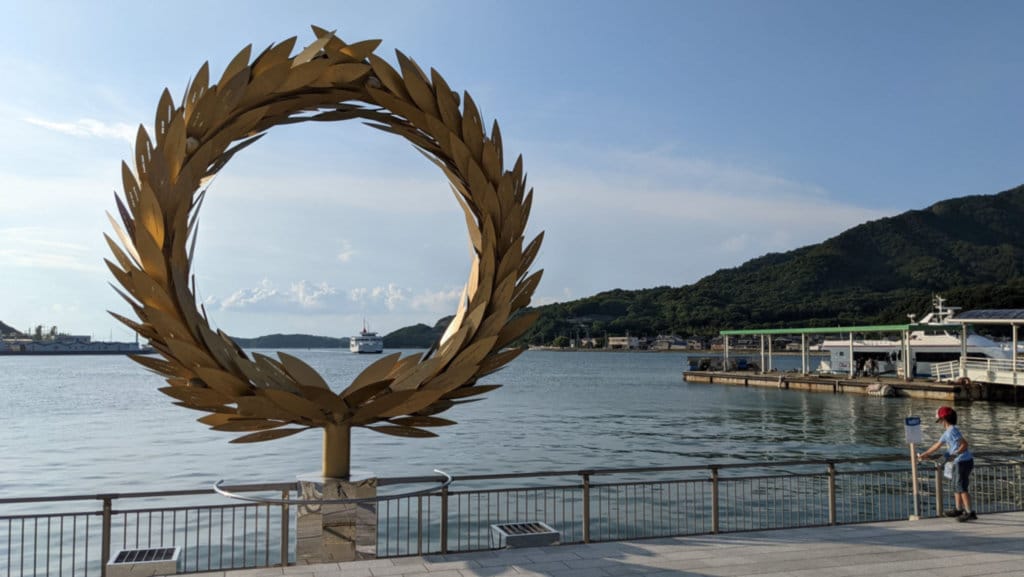
When you're on Shodoshima, after going downhill from Nakayama and then Hitoyama, the next stop is logically Tonosho. Well, "logically..." Maybe not for most visitors to Shodoshima, as they tend to arrive at Tonosho Port and start experiencing the island from there (it was also my case the first time I went to Shodoshima, back in 2009).
Since the Tonosho area doesn't have much art, especially new art from 2025, I'll briefly introduce all of it today.
Most of it is outdoor art, and as with most public art, there isn't much to say about it. It either speaks to you or it doesn't.
Regarding the "Gift of the Sun" piece, it's self-explanatory, except that it's olive leaves, not laurels. If you've seen it up close, you can vaguely see names of people on some of the leaves. They are the names of children from the island who helped create the piece with Choi Jeong Hwa. A couple of years ago, I met one of the girls whose name was there; she was a high school student at the time. It's one of the little details I love about the Setouchi Triennale—some sort of "secret" shared by the locals. Similarly, I was involved in making a permanent artwork. I won't reveal which one today, but if you've been reading for a while, you might know. I must admit that I feel proud every time I see it. It's kind of funny when I'm there with other visitors and they have no idea. The funniest part is when the volunteer staff explains the art to me. Sometimes I tell them; sometimes I don't.
But enough about me. I wasn't trying to show off; I just wanted to remind you that a lot of the art on the islands has strong ties to their location and the local communities, in more ways than most people are aware of.
Tonosho Port
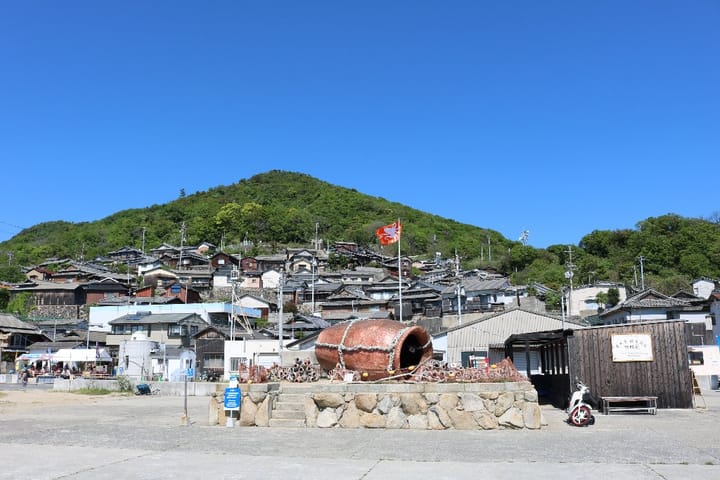
There are a few other artworks at Tonosho Port. They are more or less permanent, though they may be relocated in the future, as has happened in the past. For example, two sculptures debuted in downtown Tonosho in 2022 and were moved to the port by 2025.
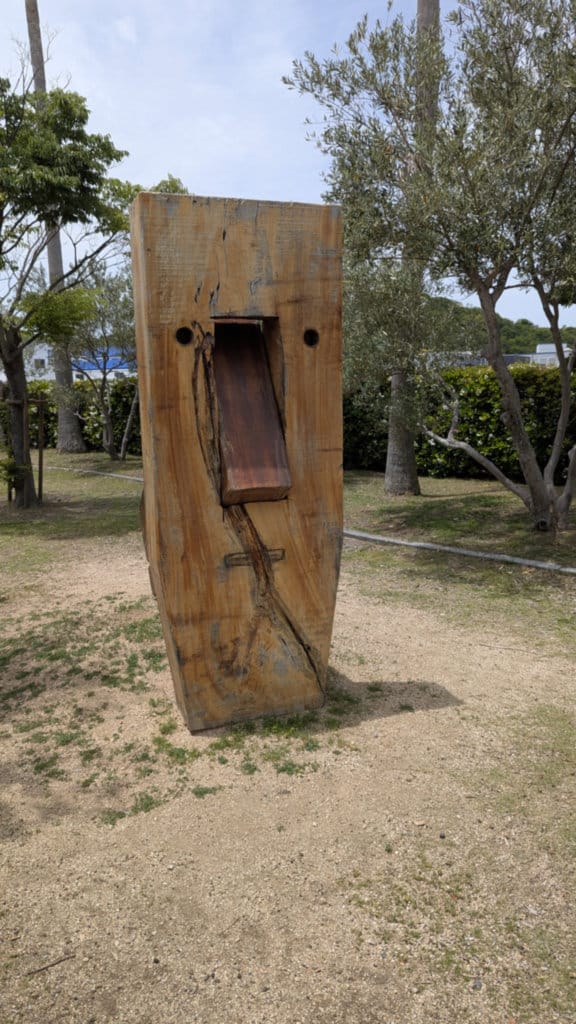
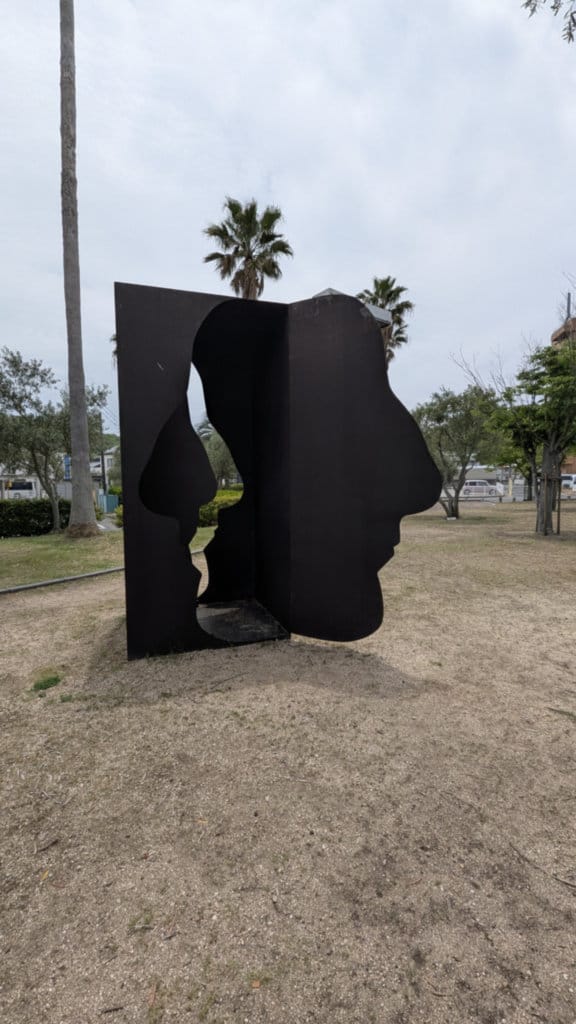
They're called "Together" and "Friends" by Stasys Eidrigevicius.
I'm not completely sure which is which. I think the wooden one is Together and the metal one is Friends, but don't quote me on that.
As you know, I prefer art "in the wild" to art confined to museums and galleries. For some reason, though, I think these two sculptures would have a stronger impact indoors than outdoors.
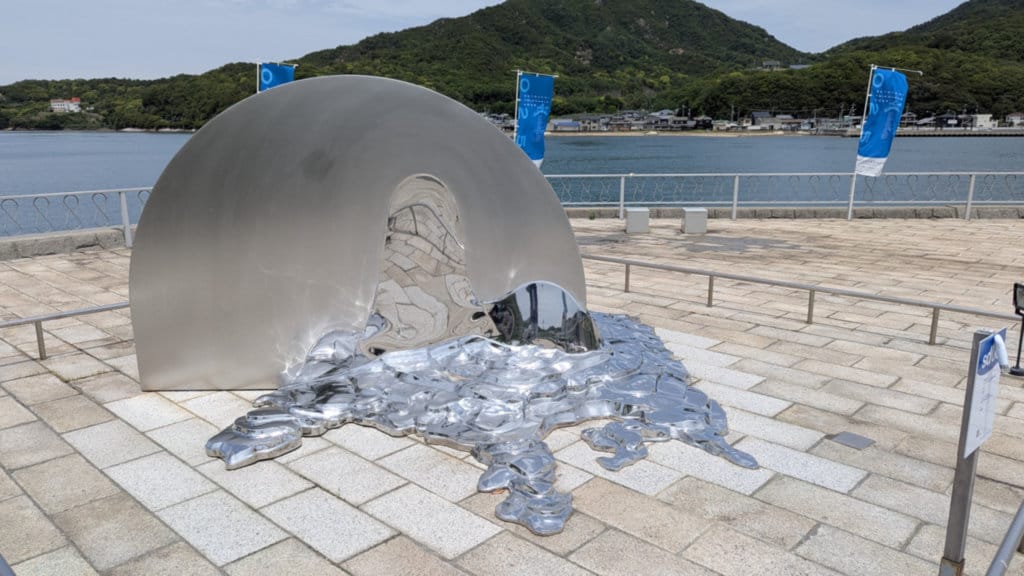
"Again..." (2019) by Kim Kyoung-Min appears to be just a semi-circle of partially melted metal. However, it contains an "easter egg." If you look closely at the "melted" part, you will see that it is actually a map of Shodoshima.
Inside the Okayama Ferry Terminal, renamed "Art No Show" a few years ago when it began to be used as an art gallery, especially for dresses and sculptures by fashion designer Junko Koshino.
The name "Art No Show" is a pun, by the way; it sounds like "at Tonosho" with a heavy Japanese accent.
The current exhibition, "The Beauty of Contrast: Eternal Roundness," has been on display since 2022.
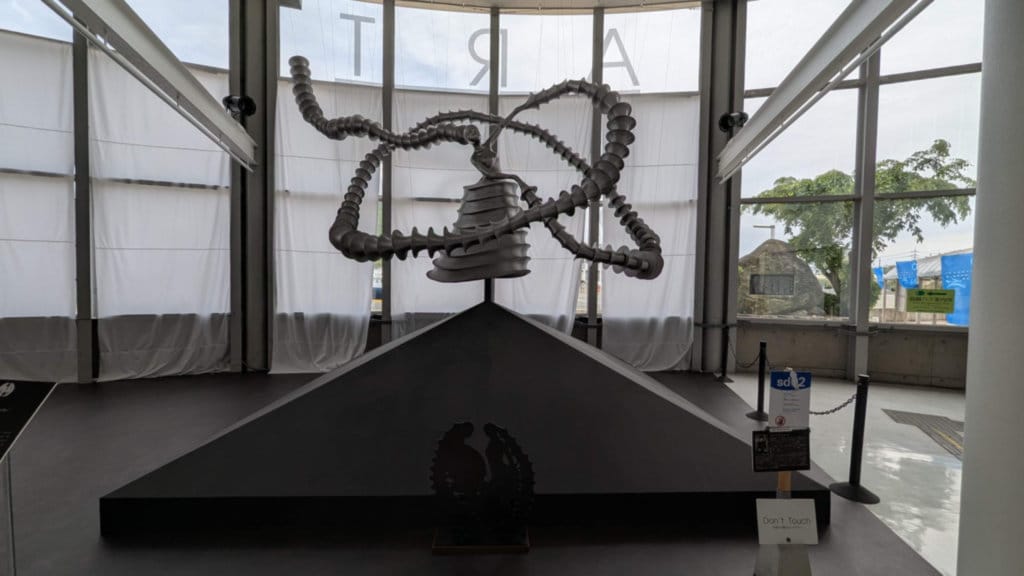
I could have taken a better picture. Maybe I have some from 2022. I'll post them later if I can find them.
Now, let's head to the historical part of Tonosho. But before entering, let's talk about this:
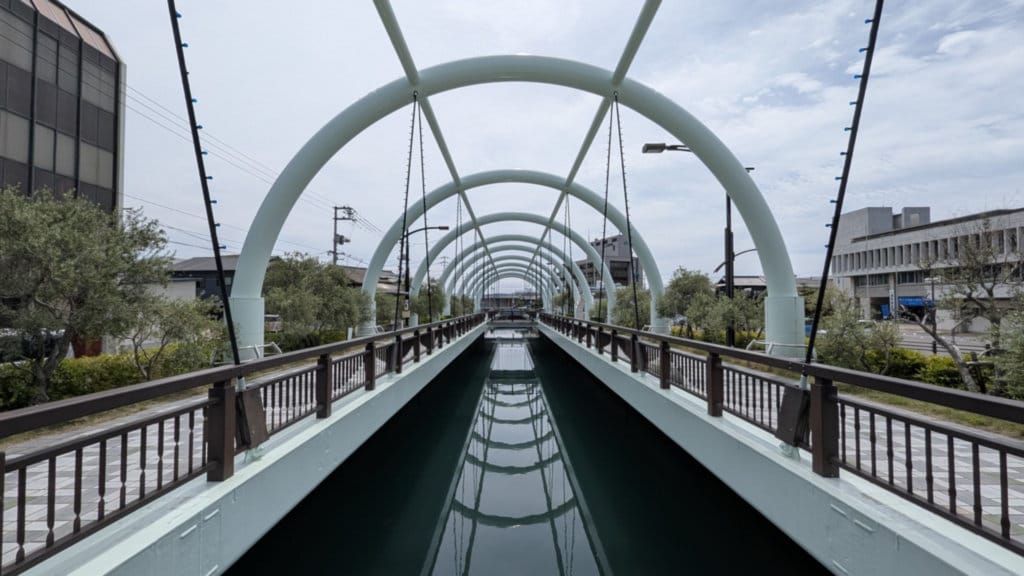
This canal crossing Tonosho is not actually a canal. It's a strait. Tonosho Port, downtown Tonosho, and the famous Angel Road are not technically on the island of Shodoshima. They're on an island that's separated from Shodoshima by a narrow strait called the Dofuchi Strait. In fact, it's so narrow that it's listed in the Guinness World Records as the narrowest strait in the world. At its narrowest point, it's only 9.93 meters wide (more or less where I'm standing taking this picture).
It's not life-changing, but it's a fun anecdote to know when you visit Shodoshima.
Next, we're finally going to the old center of Tonosho, also known as Maze Town. You'll quickly understand why when you start exploring it.
Fun fact: The town used to be a real maze. It is said that it was designed this way to protect against pirates from the Seto Inland Sea who would sometimes attack the town. This way, the locals could easily flee to safe locations while the invaders would get lost in the streets of Tonosho.
Take this with a grain of salt, though: with most "historical things" in Japan that you only hear about through tradition and hearsay, it's difficult to tell fact from fiction.
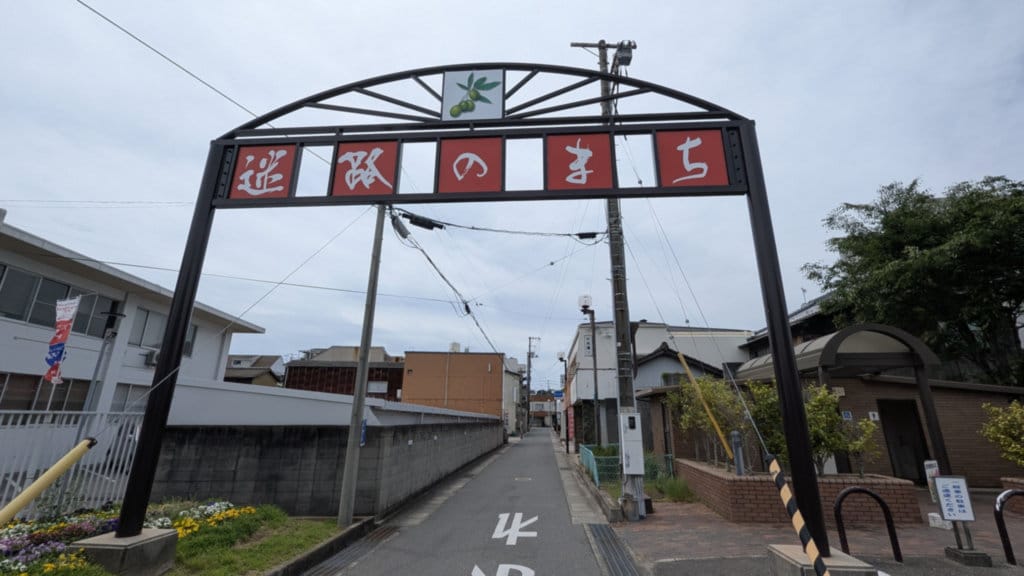
This is in Maze Town where we'll find the rest of Tonosho's art and more.
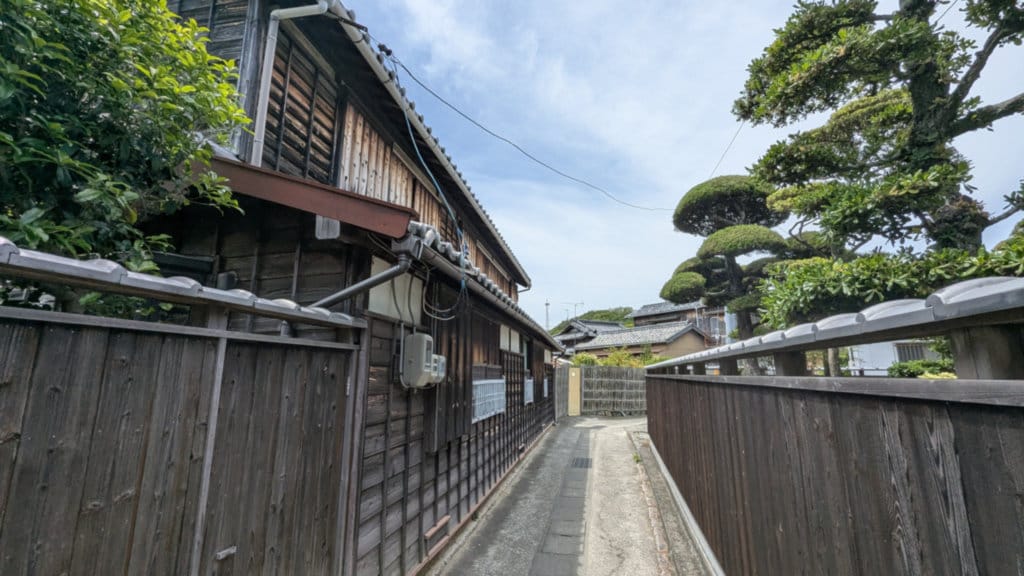
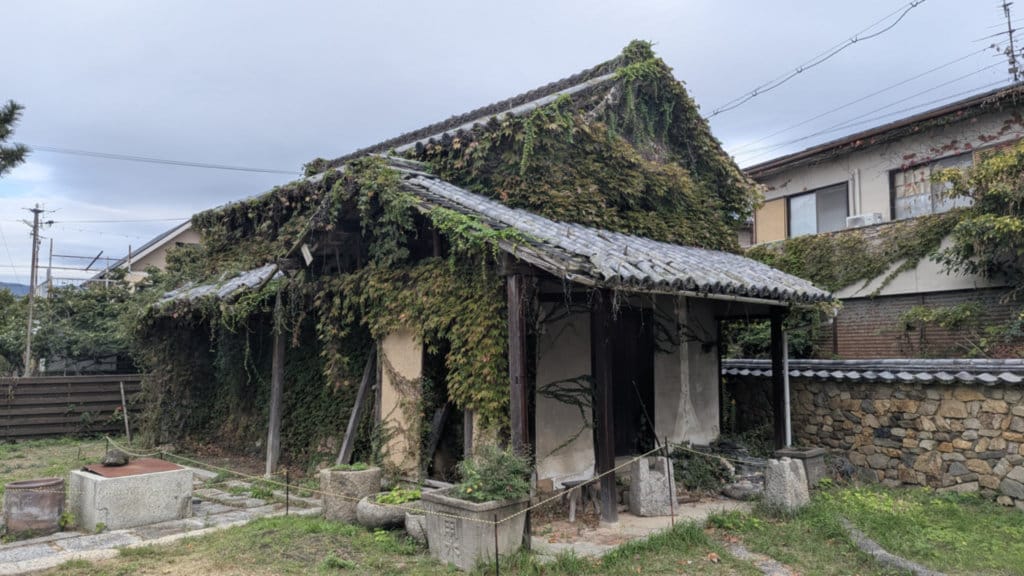
You'll also find many traditional houses in the neighborhood. Some are in good shape; others, not so much.
Nowadays, Maze Town is also a destination for art, folklore, and curiosity lovers because of the MeiPam Gallery. The gallery has been around for quite a while—longer than I've lived in Japan—and is not affiliated with Art Setouchi for the most part. I used to go regularly during my first years living in Kagawa because many local artists were exhibited there. However, one day, most of the buildings became permanently dedicated to yokai. While MeiPam still exists as a cultural hub and organizes various events throughout the year, most of it is now the Yokai Art Museum, which is slowly but surely gaining notoriety.
I must admit with great shame that I have somehow never visited it!
Maybe this is something I could do this year. Hmm...
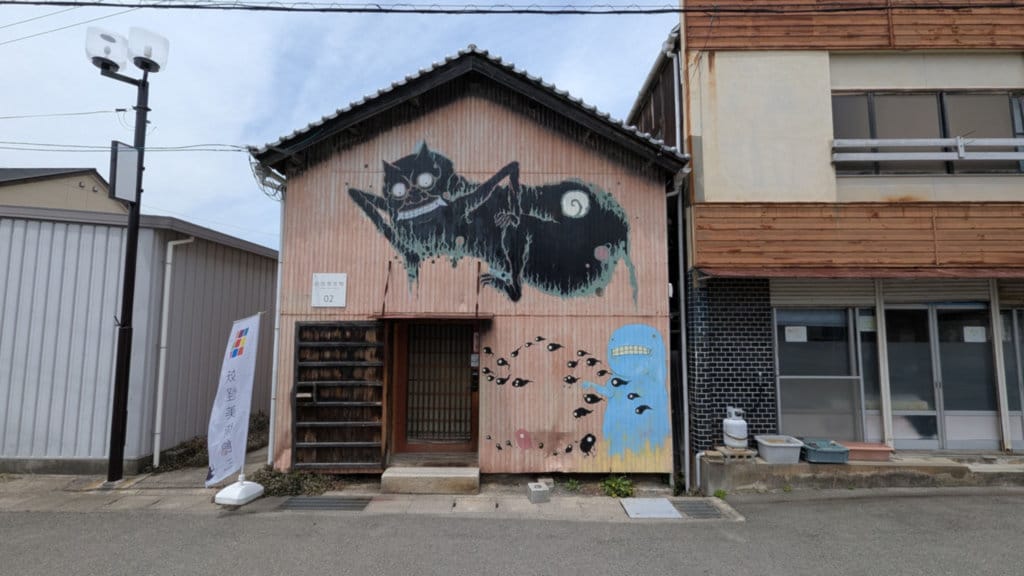
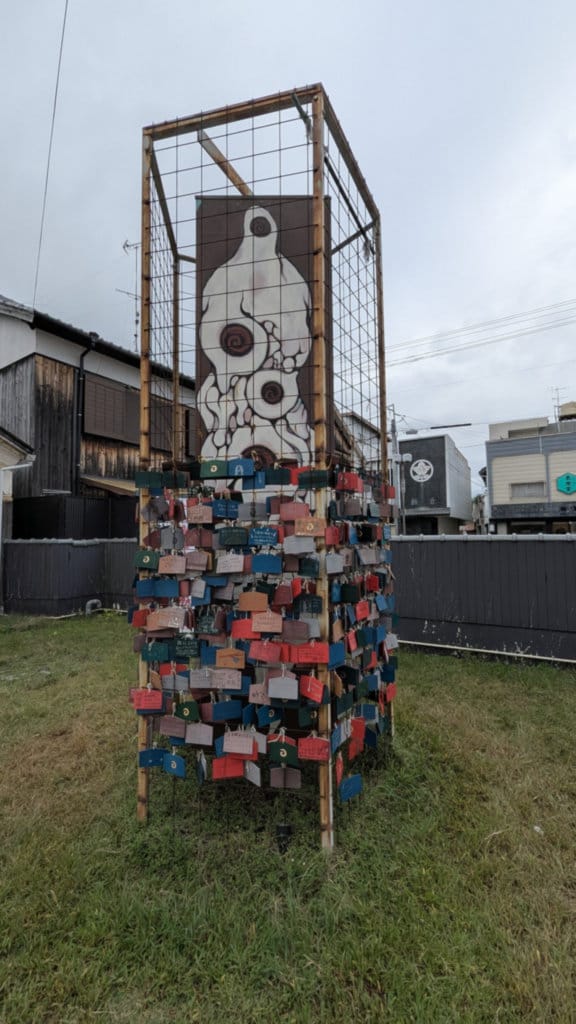
One of the few buildings, home to the yokai, as well as an 'ema' tree from MeiPam
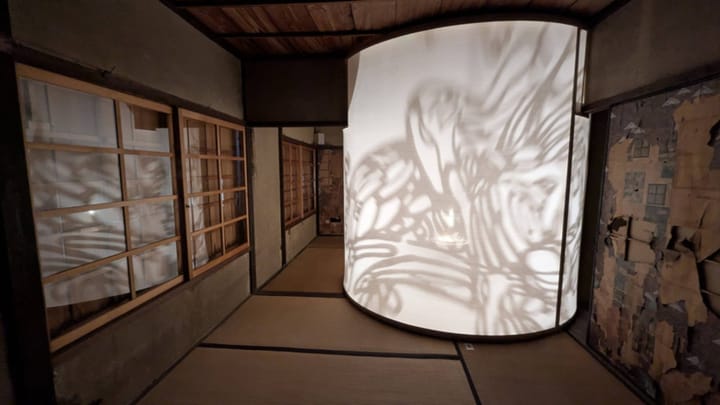
Several years ago, MeiPam started an amazing project related to Tonosho's "maze town" identity: a maze going through several houses in the neighborhood, connected in improbable and surprising ways. The project was supposed to spread further, but it didn't, and was soon ended. I never knew exactly why, but probably some necessary authorizations were not given. Instead, another strange maze was designed inside one of the original MeiPam galleries. It is now permanent, and while it is difficult to take pictures inside, photography is nowallowed (it wasn't before), so here are two pictures:
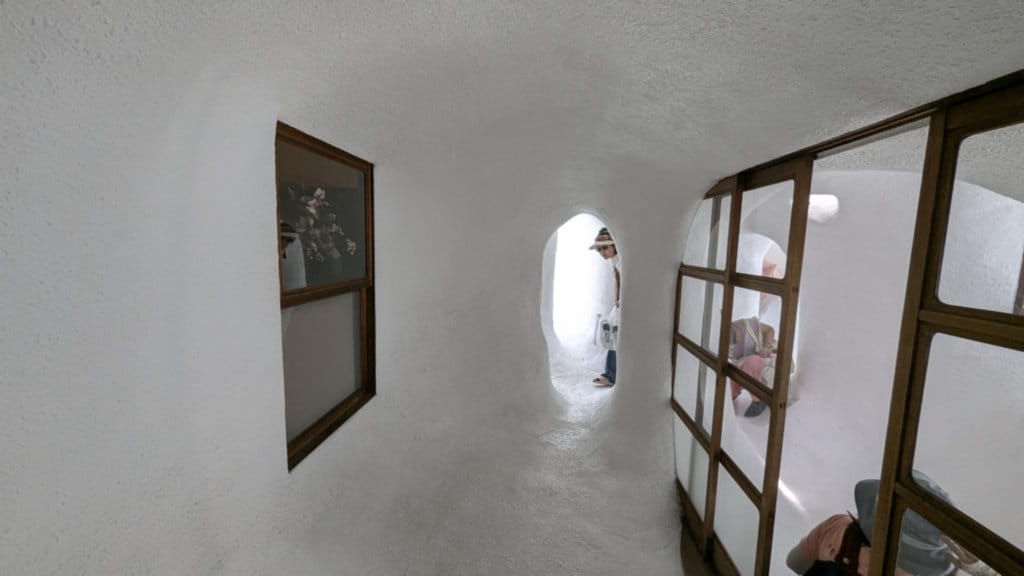
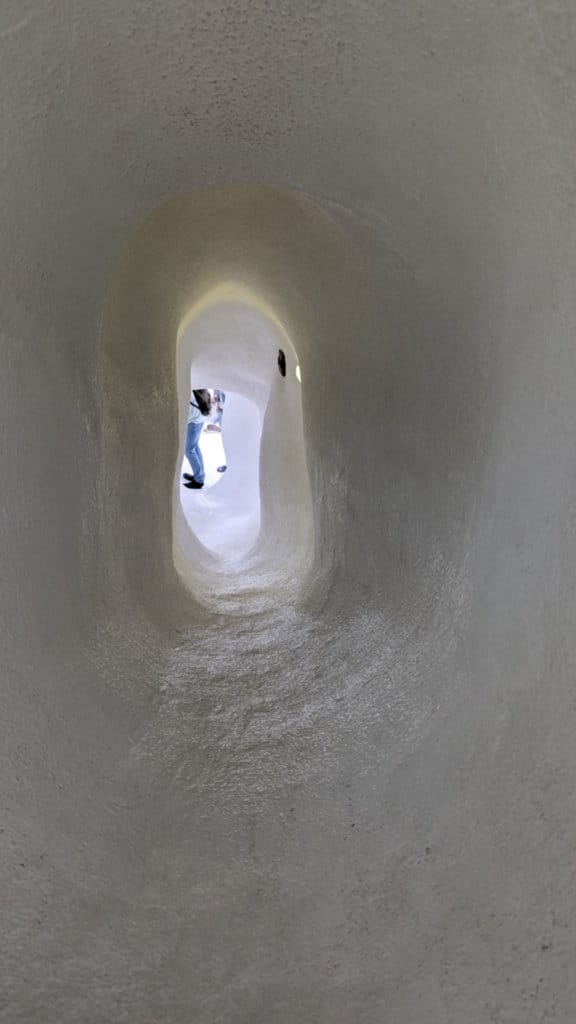
It's called Maze Town - Phantasmagoric Alleys, and it's an artwork by a collective called "Mé" (pronounced "meh," meaning "eye" in Japanese). The core members are Haruka Kojin (artist), Kenji Minamigawa (director), and Hirofumi Masui (production manager).
I think I need to write one full post about it, though. I don't know if I have a lot to tell you about it, but I have a few interesting pictures to show you.
In Tonosho in 2025, there was a piece that was not new. It had been part of the Setouchi Triennale in 2013 and 2016 (It was in Hitoyama in the old rice warehouse housing Ryo Toyofuku's art in 2025).
The piece is called Voyage Through The Void and is by Nobuho Nagasawa.
Compared to past years, there were two major changes this year (in addition to the new location). One good change is that pictures were allowed this time! The not-so-good change was that the installation was behind a fence, which only allowed viewing from one angle instead of being able to walk around it. The only way to approach it was to wait in line to climb on it, but I didn't do that this year.
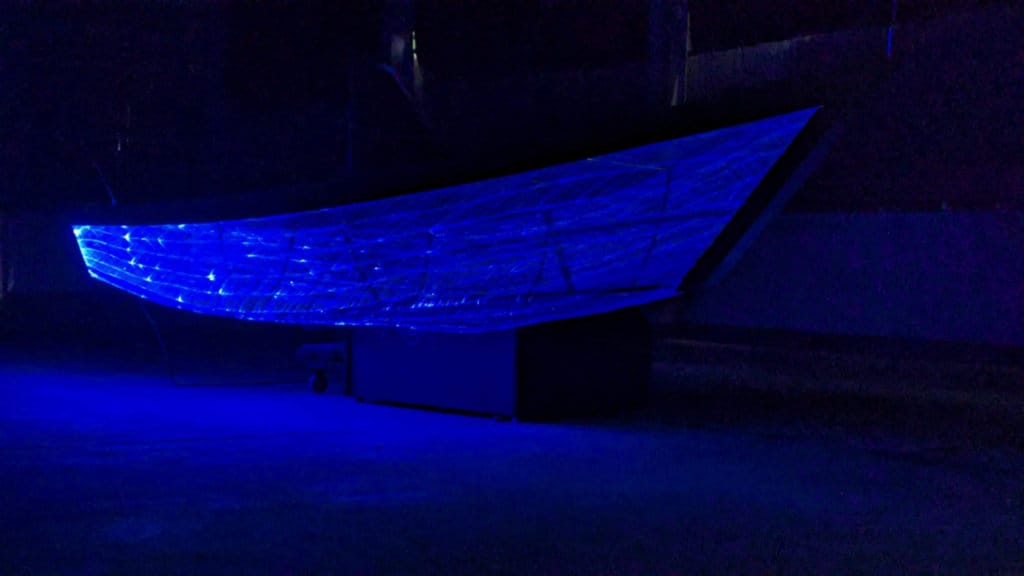
I'll show you more later. Probably on Setouchi Explorer, as it's not a new artwork, and I think I'll use my old blog for "archives" mostly. (Don't worry, I'll link it in this newsletter if you're not subscribed to my old blog)
The last artwork in Tonosho in 2025 was only available in the autumn session of the festival. It was called Mountain and was by Sopheap Pich.
At first I was a bit confused and unimpressed by it:
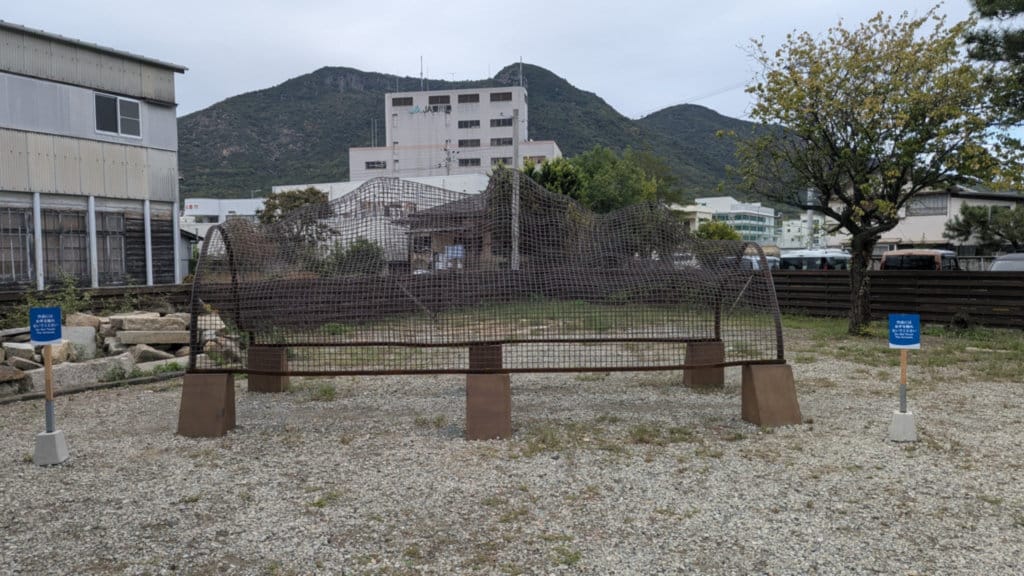
Well. I was not looking at from the right angle!!! (thank you, Andrew for pointing this out).
This is how you're supposed to look at it:
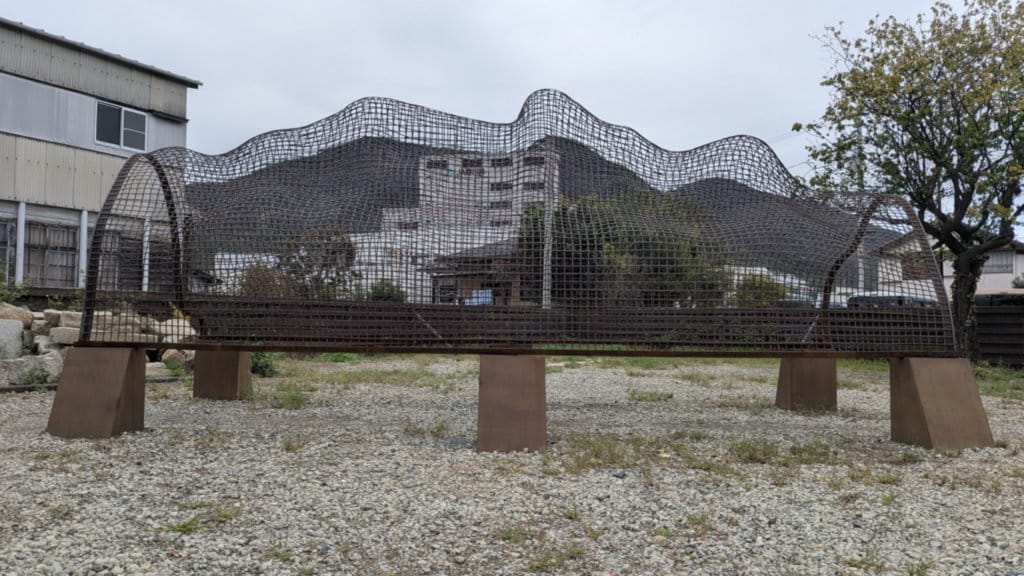
Yes, it's kinda fun, but it's not mind-blowing either.
That's all for the art in Tonosho in 2025.
I've almost finished showing you the art from Shodoshima. There are a few scattered artworks here and there I haven't talked about yet. They'll probably get their own posts soon. I'm not sure if they'll be my next Japan Art Islands posts or if they'll come at a later date after I show you other islands (if you have an opinion about this, please share it in the comments).
As always, thank you for reading.
If you enjoyed this post, please share it with your friends and contacts, and consider subscribing if you haven't already.
Best,
David
Comments ()